
WA nonprofit travels the world to mend fractures. It now hopes to heal others
A decade or so ago, Dr. Sariah Khormaee was a Harvard Medical School student who already had earned a doctorate in chemical engineering and biotechnology.
Deeply interested in health equity, she’d traveled to Vietnam to observe surgeons repairing broken bones in challenging settings.
The surgeons were happy to explain.
The surgical “nail” they were implanting in bones — and the training they received to carry out the procedure — were provided by SIGN Fracture Care International, a nonprofit medical manufacturer in Khormaee’s home state: Washington.
Khormaee was floored.
The Vancouver, Wash., native had never heard of Richland-based SIGN.
Its global, humanitarian mission is to treat injuries in developing counties where untreated bone injuries can be catastrophic or even fatal for poor patients.
Khormaee found SIGN’s website and introduced herself through the ”Contact Us” section.
That, in short, is how Dr. Sariah Khormaee, M.D., Ph.D., met Dr. Lewis Zirkle, the retired Richland surgeon who founded SIGN, and Jeanne Dillner, Zirkle’s longtime CEO.
The relationship blossomed. Today, as Dillner prepares to step down, Khormaee is stepping in to fill her shoes.
She officially takes over Nov. 1.
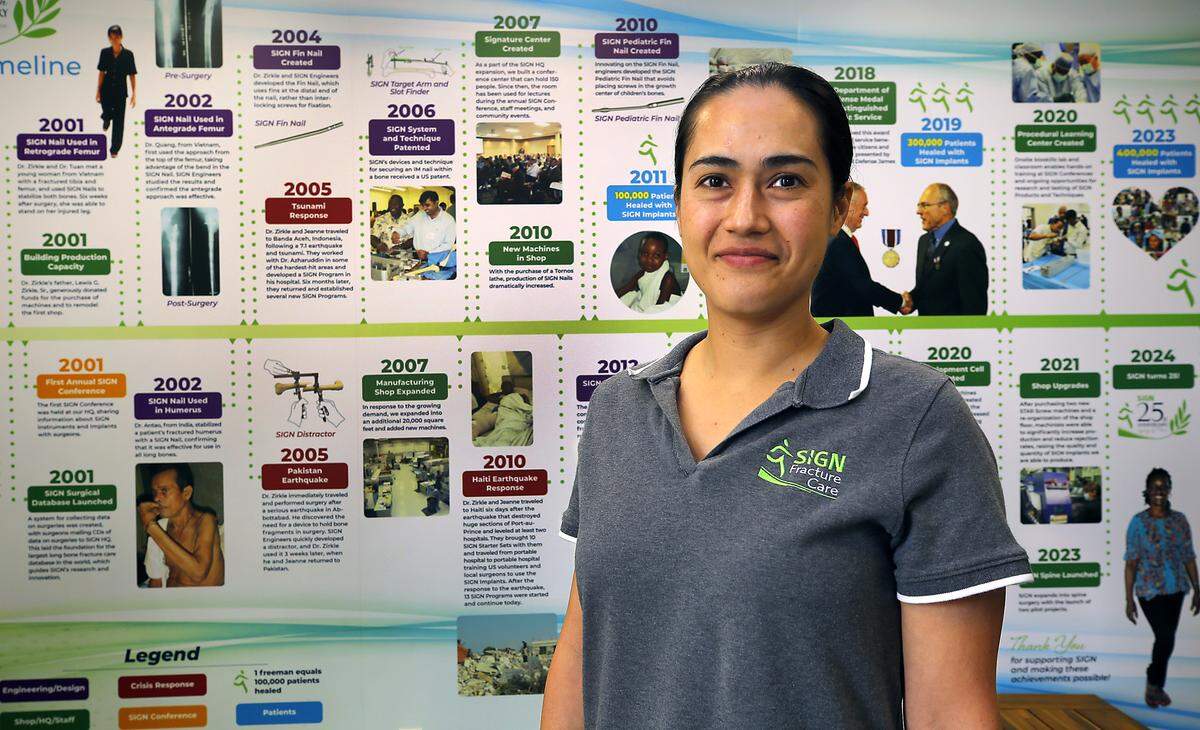
But she’s been in the Tri-Cities for several months while she learns the ropes at one of the Tri-Cities’ most visible exports — free medical training and implants to surgeons operating in the world’s most difficult places.
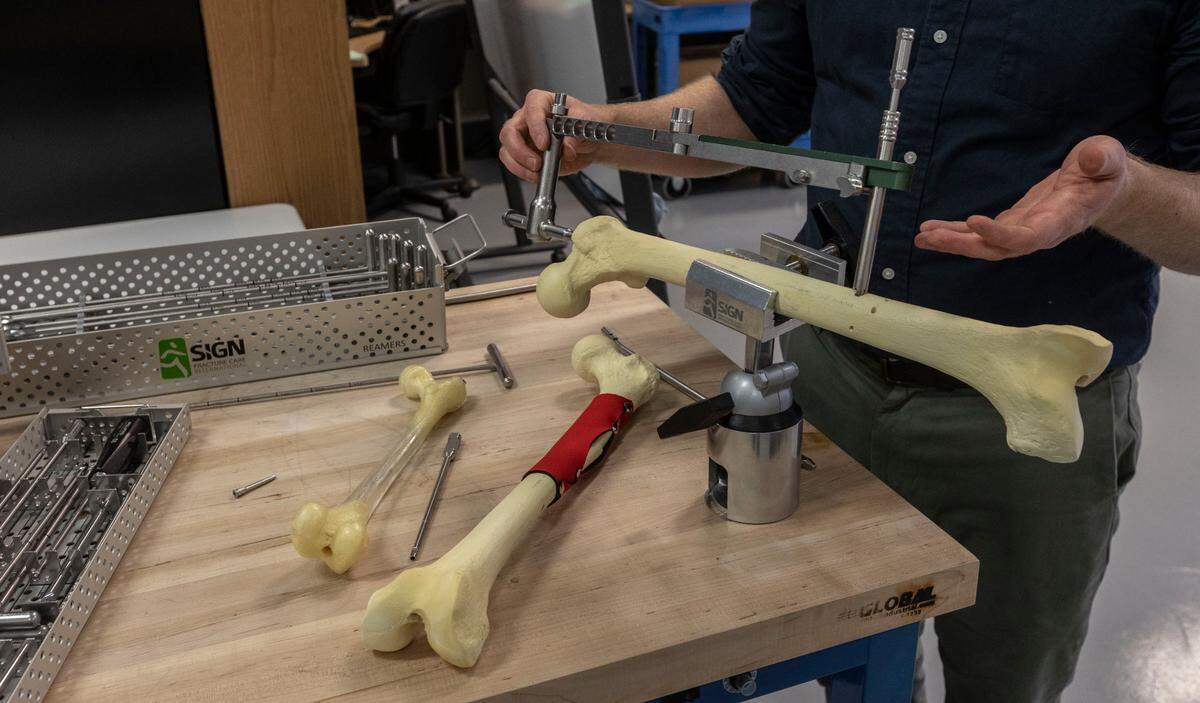
The SIGN “nail” is a metal rod that is implanted in the long bones of arms and legs.
SIGN created the technology and the surgical approach to work in areas where electricity, imaging equipment and other operating room basics aren’t always available.
Donor supported
SIGN receives no money from the government for its mission. It is supported almost entirely by donations from Tri-Citians and local service organizations that embrace its vision.
Contributions accounted for almost 90% of the $6.2 million in revenue it reported in its most recent filing with the IRS.
In its 25 years to date, it has trained 7,000 surgeons who have implanted nearly 500,000 devices. It is on track for a record 30,000 in 2025.
As she steps into her new role, Koromaee is charged with continuing its mission to support surgeons where they’re needed.
She is also leading SIGN into a new era: It is exploring techniques to treat joint and spine injuries in similar circumstances.
“We’re looking at other parts of the body,” she said.
Khormaee is perfectly suited to lead SIGN into a new area.
Her resume includes a bachelor’s from the University of Washington, an engineering doctorate from Cambridge University, a medical degree from Harvard and spinal surgery training from Stanford University Medical Center.
She worked most recently as an spinal surgeon at the Hospital for Special Surgery in New York City.
She wouldn’t have considered giving up her practice for any other organization, she said. But SIGN offered the chance to get in on the ground floor as it seeks ways to treat more patients with more diverse needs.
Tri-Citians can meet Dr. Khormaee and visiting surgeons next week when it holds its annual conference and family reunion. The public reunion is a major fundraiser and begins at 6 p.m., Sept. 9, at the Richland Holiday Inn, 802 George Washington Way.
‘Pretty rough hand’
Zirkle established SIGN in 1999 after retiring from his successfurl orthopedic surgery practice in Richland.
It was born of the lesson he’d learned as an Army surgeon in Vietnam — that badly injured people can return to normal functions with the right treatment.
SIGN has been widely recognized for its impact in the decades since. In 2018, then Defense Secretary Jim Mattis, another famous Richland export, presented Zirkle with the department’s Medal for Distinguished Public Service.
At the time, Mattis praised Zirkle for his work, saying it shows America will stay a great country because people like him prove it is a “very very good country.”
“He was not going to places with four-star hotels and five-star restaurants,” Mattis, who is from Richland, told Tri-Citians at the awards ceremony. “He was going to places that have been dealt a pretty rough hand.”
In Richland, the new CEO is taking over a combination manufacturing plant and surgical training center.
How it works
SIGN produces the surgical nail and related gear. It uses modern manufacturing equipment to form steel into custom-shaped rods or nails that can be surgically inserted into broken bones.
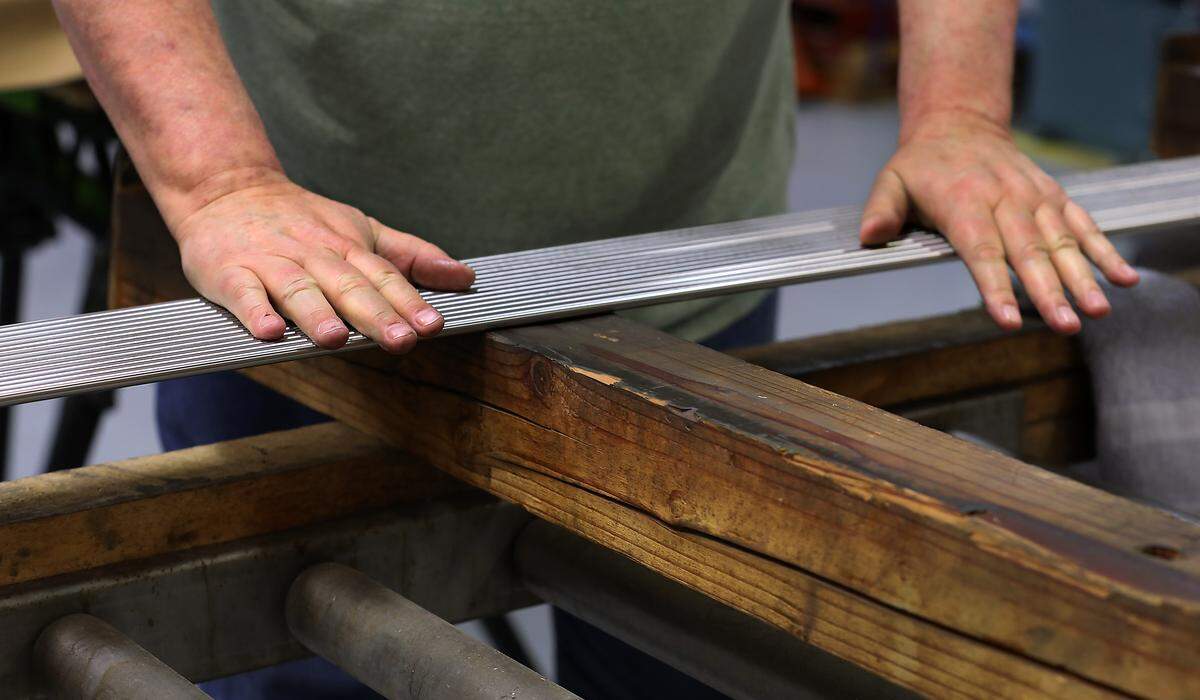
It recently upgraded its equipment to expand capacity by about 70%.
The rods provide lateral stability, but no protection against twisting. To secure the injured bone from further damage, surgeons anchor the rods with screws threaded through holes in either end.
The task would be simple on a work bench, but is terribly complicated when performed inside a human being.
SIGN created templates to facilitate the process. Similar to the templates a cabinetmaker uses to mark spots for handles, the device guides surgeons as they align the screws with the implant.
Each implant costs about $175. They are free to surgeons as long as they keep reporting their activities back to SIGN.
SIGN began with a focus in Southeast Asia. Today, it is active in India, the Middle East, much of Africa and parts of Central and South America.
SIGN doesn’t operate clinics itself. Instead, it provides equipment and training with surgeons determining where the need is. As the concept has matured, SIGN-related centers have emerged.
Ethiopia’s Black Lion Hospital treats hundreds of patients a year and is one of dozens of medical centers that house SIGN programs.
It chiefly serves countries that the World Bank considers low income, with per capita incomes as low as $1,145 a year or less.
Bioskills Lab resource
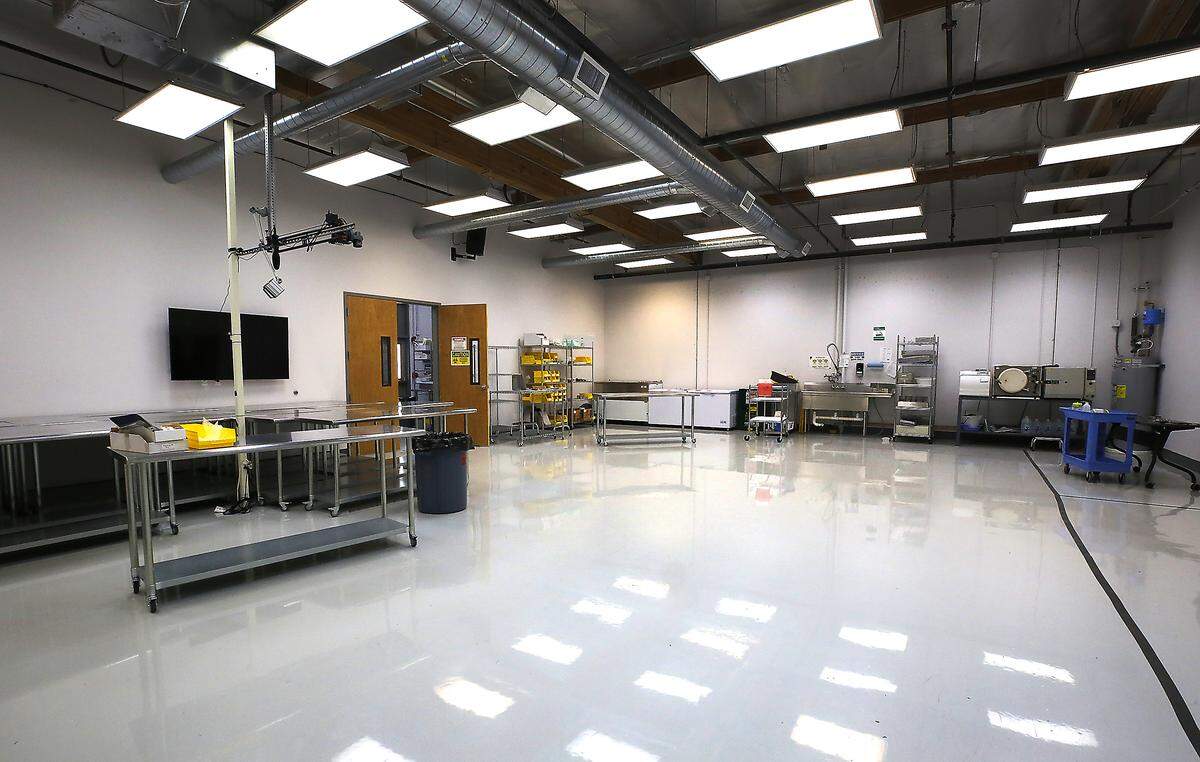
Surgeons travel to Richland to practice its techniques on donated cadavers in its Bioskills lab..
Khormaee hopes to see the Bioskills Lab become a resource to Tri-Cities medical workers who need training on cadavers and specimens.
SIGN’s archives are packed with thousands of tales about how SIGN and its surgeons turned catastrophes into happy outcomes.
Its most recent newsletter highlights the story of a Tasmanian gospel musician who was brutally injured in a wreck a week before his wedding. Both his legs had open fractures and there was critical soft tissue damage.
At the hospital, SIGN surgeons stabilized his legs and reconstructed the tissue damage.
“After six months of hospitalization, (the groom) was ready to be discharged. He left behind this tragic accident and walked down the aisle with his bride,” SIGN shared.
Get involved
Family reunion sponsorships to help pay for the gathering of supporters and surgeons to learn about SIGN is available via lori.maier@signfracturecare.org
Go to signfracturecare.org for information to support its mission.
This story was originally published September 5, 2025 at 5:00 AM.