
1,100 jobs could be cut at U.S. national lab in Tri-Cities under Trump budget
AI-generated summary reviewed by our newsroom.
- PNNL could lose 1,000+ jobs if proposed federal budget cuts are enacted.
- Energy and climate research programs are targeted for cuts, including at PNNL.
- Tri-Cities economy risks ripple effect, endangering 2,500 additional local jobs.
In a worst case scenario, Pacific Northwest National Laboratory could lose 1,100 employees due to federal budget cuts proposed by President Trump for the coming fiscal year, according to Friends of PNNL.
The new organization, which advocates for PNNL and the federal research done there, said that information was shared at a June staff meeting led by PNNL Director Steven Ashby. A group member was shown a transcript of the meeting, but the Tri-City Herald was not able to obtain it independently.
The lab employs about 6,400 people and has a $1.6 billion annual research budget.
PNNL would be hit hard by cuts to two Department of Energy programs that provide research money to PNNL. They are the Energy Efficiency and Renewable Energy (EERE) program and the Biological and Environmental Research (BER) subprogram.
PNNL would lose $160 million under the proposed cuts to EERE, which would eliminate the entire program at PNNL. The BER funding would be cut nearly in half to $100 million, according to Friends of PNNL.
An appropriations document that includes a “Laboratory Table” for proposed PNNL funding for fiscal ‘26 shows adjustments in other programs — some up and some down — but none with a change as large as the cuts to the renewable energy program and the environmental research program.
A significant loss of workers at PNNL, which is the Tri-Cities’ largest single employer, would be felt in the Tri-Cities economy.
Together PNNL and DOE’s Hanford nuclear site adjacent to Richland, which contracts work to multiple companies, employ about 19,000.
The Tri-City Development Council says that the two DOE projects account for 12% to 13% of the jobs in Benton and Franklin counties but about 25% of the income.
Tri-Cities economy
Steve Ghan, a retired PNNL scientist and a member of Friends of PNNL, told the Herald the impacts of jobs that would be lost under the administration’s proposed budget request would ripple through the economy as those workers’ incomes would be no longer available to be spent on food, goods, entertainment and education.
“It translates into a lot of jobs and quite a hit on the economy,” he said.
Friends of PNNL estimated that 2,500 non-PNNL jobs would be at risk if 1,100 PNNL jobs are lost.
Across all national laboratories, an estimated 7,700 jobs would be lost directly under the Trump administration’s proposed fiscal ‘26 budget, said Sen. Martin Heinrich, D-N.M., at a June hearing of the House Natural Resources Committee.
Doug Ray, a PNNL associate laboratory director before he retired and now a member of Friends of PNNL, points out that the proposed budget reduces the DOE Office of Science budget by 14% and that the cuts extend to other federal agencies funding U.S. research.
The National Science Foundation budget would be cut by 56% and the National Institutes of Health budget would be cut 45%.
“Those are huge numbers that ... could really upend what has been a major economic driver and scientific leadership for the United States for 50 years,” Ray said.
“PNNL is sadly not unique in looking at what could be a very significant reduction in scientific funding for research and development,” he said. “In my view that’s a horribly short-sighted way to reduce government spending.”
Other countries, including Canada, France and Denmark, are among those inviting U.S. scientists and engineers to relocate, he said.
“It’s much easier to destroy than to build,” Ghan said.
Research job losses
The Biological and Environmental Research (BER) program cuts are in environmental science, primarily those related to global climate change.
The Energy Efficiency and Renewable Energy (EERE) program includes research at PNNL to find more efficient ways to use energy resources in transportation, buildings and industry and to advance renewable energy technology.
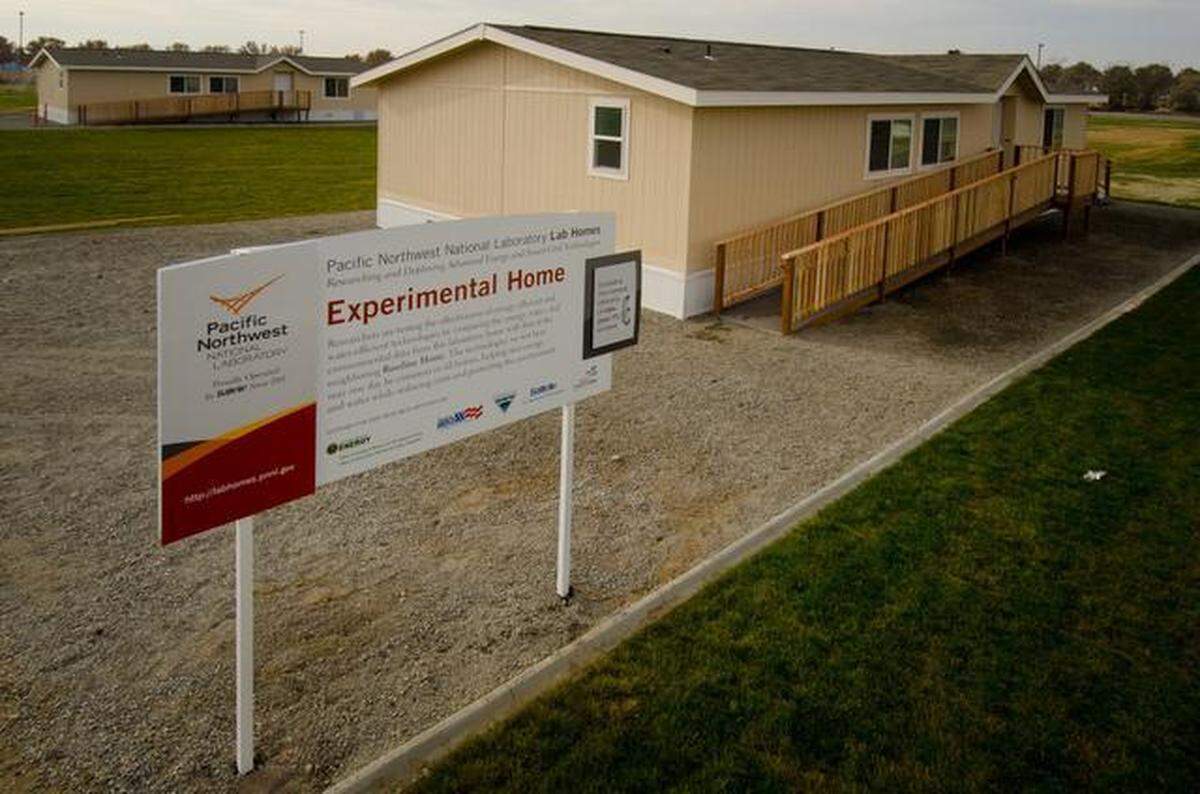
Research includes:
▪ Ways homeowners and builders can make houses and other buildings more energy efficient, from lighting to windows to appliances and buildings that interact with the electric grid.
▪ Better, more economical batteries to store energy, particularly from renewable sources such as wind and solar, to make it available when it is needed, even if the sun is not shining and the wind is not blowing.
▪ Making vehicles more efficient and cheaper to produce through lightweight materials, while improving the design and energy storage of vehicle electric batteries and lowering the cost of hydrogen fuel cells.
▪ Converting biomass, such as agriculture waste, into biofuel.
The Trump administration’s budget proposal is just one step in the process of setting the federal government’s budgets for the fiscal year that starts in October.
Congress will use the president’s proposed budget as a starting point as it crafts the appropriation bills that set the budget for federal programs, including much of the spending at PNNL.
Friends of PNNL are calling on the community to contact Washington’s Congressional delegation, including Republican Rep. Dan Newhouse and Democratic Sens. Patty Murray and Maria Cantwell with support for PNNL research as Congress prepares to take up the Trump administration’s budget proposal.
PNNL referred Tri-City Herald requests for information to DOE in Washington, D.C., which did not respond.
However, after the president’s proposed fiscal ‘26 budget was released this spring, Ashby sent a message to PNNL employees, which the Tri-City Herald obtained.
He told workers then that if the president’s budget is approved, it could lead to large layoffs at several national laboratories. He also said that staff, some of whom were furloughed in March, could expect more furloughs.
This story was originally published July 12, 2025 at 5:00 AM.