
Whooping cough outbreak infects wrestlers and others at Tri-Cities area school
Parents of many students at the Kiona-Benton City School District were warned last week of an outbreak of whooping cough.
It’s particularly serious, or even deadly, for babies younger than 1 year old, and is just one of the respiratory illnesses infecting people around the Tri-Cities this month.
The Benton Franklin Health District also has an eye on cases of influenza, RSV and COVID in the Tri-Cities area.
Parents of high school and middle school students were notified by the school district last week that three members of the boy’s wrestling program had whooping cough.
There also are additional cases in the school district area, either confirmed or suspected based on symptoms and links to others with the infectious illness, said Dr. Steven Krager, interim health officer for Benton and Franklin counties.
There also may be other cases in the Tri-Cities area.
About 10% of cases are estimated to be reported, Krager said.
The Washington state Department of Health says that there were 2,040 cases of suspected or confirmed whooping cough reported in 2024, compared to 87 the year before.
Benton County had eight reported cases or 3.8 per 100,000 people. Franklin County also had eight reported cases, but its lower population gave it a rate of 8 per 100,000 cases.
That compares with Clark, Whitman and Pend Oreille counties, which had the highest rates in the state with more than 100 reported cases per 100,000.
But cases in the Tri-Cities area appear to be increasing in recent months. Since September, there have been 14 confirmed and three probable cases reported in Benton and Franklin counties combined, Krager said.
Whooping cough risks
Parents of children in Ki-Be schools were warned that people of all ages can get whooping cough.
People with lung disease, such as asthma, and those with a weakened immune system also are at higher risk of serious illness, Krager said.
The Benton Franklin Health District wants people to be aware of the illness and get tested if they think they may have it.
Whooping cough may begin like a common cold, but unlike a cold, the coughing can last for weeks or months, according to the Centers for Disease Control and Prevention. It may be worse at night and cough medicines usually do not help.
Some people may have a high-pitches “whoop” when they inhale after a coughing fit or may vomit during or after coughing.
Some babies don’t cough at all with the illness, but may have apnea or struggle to breath, according to the CDC.
People can spread the bacteria that causes the disease for at least two weeks after coughing begins.
Antibiotics taken early in the illness may make the infection less serious and shorten the time a person is contagious.
Because newborns do not have a fully developed immune system, people spending time around them including parents, siblings, grandparents and baby sitters should be up to date on their whooping cough vaccination, which often is combined in the Tdap vaccine with diphtheria and tetanus protection, according to the CDC.
Tri-Cities flu, RSV season
The flu season appears to have peaked in the Tri-Cities, Krager told the Benton Franklin Health District board last week based on hospital emergency department visits.
Flu patients coming to emergency department peaked in the Tri-Cities area at about 6% of patients a little over a week ago but have now fallen to just over 3% of patients. That is still at about the level of the peak last winter in Benton and Franklin counties.
RSV, or respiratory syncytial virus, emergency department patients have been fewer than last year, both statewide an in the Tri-Cities this respiratory season. In the Tri-Cities only 1.25% of all emergency patients had RSV at its peak a few weeks ago.
The drop in patients might be linked to the RSV vaccination approved in 2023 by the Food and Drug Administration, according to Krager.
The CDC recommends the vaccine for older adults and it also is recommended for pregnant women to pass the protection to their baby.
Babies, young children and older adults are most likely to be hospitalized or have severe symptoms from RSV, and the illness is the leading cause of infant hospitalization, according to the Washington state Department of Health.
Tri-Cities COVID
COVID remains at a fairly low level this winter in Benton and Franklin counties, based on emergency department data. Less than 1% of emergency department patients have had the virus, either locally or in Washington state.
However, neither the Tri-Cities area or Washington state has seen much of a winter spike, as happened last year, Krager said.
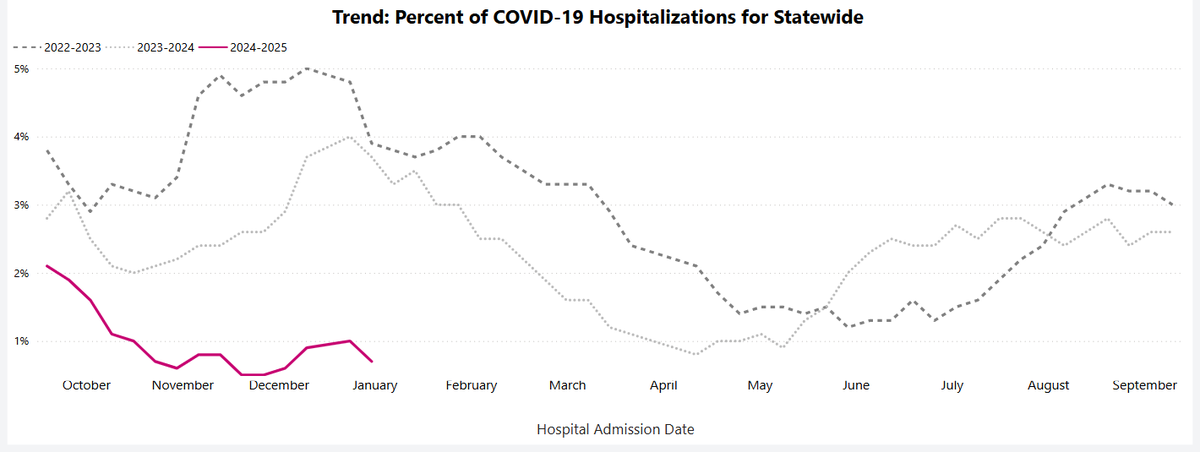
Some other regions of the nation have seen a winter increase in COVID cases and it’s possible the Tri-Cities area could yet have an increase this winter.
But with only a few years of COVID data and a rapidly changing virus, predictions on what could happen are uncertain, Krager said.
This story was originally published January 21, 2025 at 5:00 AM.