
‘It has felt like chaos.’ The inside story of Tri-Cities medical workers fighting COVID-19
He walks the second-floor hallway of Trios Southridge Hospital passing room after room of people struggling to lower their spiking body temperature or simply breathe.
The doors, normally propped open, are all closed.
And the health care worker can’t help but notice signs posted outside each room, warning that the patient is in isolation because they either are COVID-19 positive or awaiting test results.
It’s an even bleaker picture down the hall in the intensive care unit, where the health care worker knows every patient is intubated.
Within days, several likely will be dead — victims of the respiratory virus that has swept the globe.
“There was a sense of, you know what’s coming but you don’t want to accept it,” he said. “On the floor you’d go room to room and start seeing (patients) getting worse and getting worse. Maybe one or two were getting better, but others were deteriorating and not eating.”
“It was a pretty sad time,” he added.
Front-line workers have tried to suppress their feelings while dealing with so many distressed and dying people, but they can’t deny that the anxiety of the last couple of months weighs on them.
“This is going to be the new normal. For how long, we don’t know.”
In a series of interviews, several medical professionals at Trios spoke to the Tri-City Herald about their concerns that poor planning exacerbated the problems seen nationwide, including the lack of testing, protective equipment and proper screening.

They’re concerned that many Tri-Citians were not taking the coronavirus pandemic seriously enough.
And they said the for-profit hospital group, LifePoint Health of Tennessee, which now owns two Tri-Cities hospitals, has not been doing enough to implement safety measures or involve medical staff in key planning decisions.
That includes, they said, allocating one N95 mask a day to staff and asking them to store it in a paper bag when not in use.
“Nothing got done until (the coronavirus) was already here,” one Trios employee said of the administration.
Hospital workers said they’re scared about the severity and swiftness of the disease that’s struck many in the community — many more than current numbers of deaths and positive tests show, they say.
But they also worry about themselves and their loved ones.
Positive test brings fear
In the past few weeks, a physician and five nurses at the Kennewick hospital have admitted to their colleagues testing positive for COVID-19 and been unable to help patients while being quarantined.
One medical professional told the Herald they knew their fate when they got home at the end of a long shift and started having chills.
Then the fever hit — 102.8 — along with a headache, shortness of breath, tired muscles and back pain. The worker lost a sense of taste and smell the week before, but did not show any other symptoms at the time.
“It was very scary. The biggest thing is ... you are alone,” said the Trios employee, who immediately isolated from loved ones and got tested the next day. “You go to bed with chills and you don’t know if you’re going to wake up more short of breath or not. My biggest worry was that I would wake up ... getting ready to be intubated.”
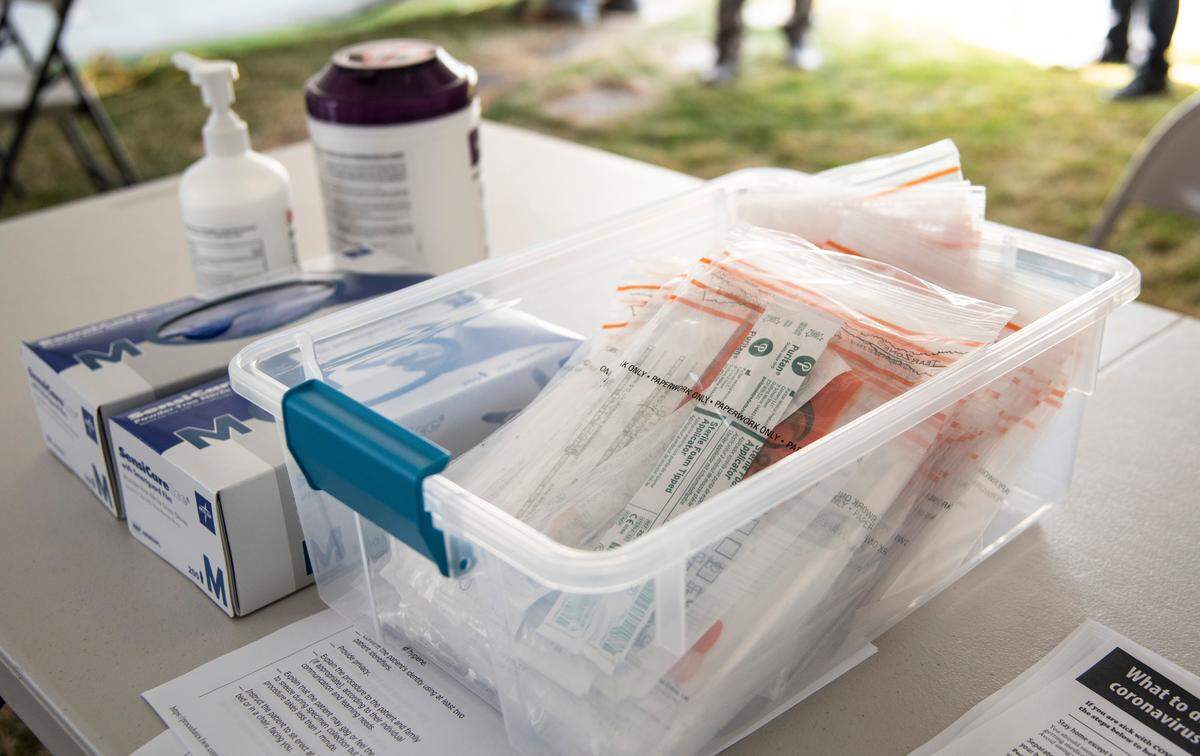
The health care worker believes the infection was acquired because of a lack of the right equipment while dealing with one of two very sick patients.
The worker compared the experience to what had happened with the older patients coming into Trios, but wanted to avoid going on a ventilator at all costs.
“You’re fine, fine, fine, and then all of a sudden you just get worse. ... A couple of times, despite knowing what you needed to do, your will to do things goes away.”
While sick, the medical worker made sure to walk around and cough often to help keep the airways of the lungs open.
The worker’s primary doctor prescribed the anti-malaria drug hydroxychloroquine and the antibiotic azithromycin, which were taken with zinc, along with Tylenol and aspirin.
Trios has been using the three-drug combo, say medical professionals, to help lessen symptoms in patients who test positive.
A person who rarely gets sick, the medical worker told the Herald about experiencing fear for the first time in their life after the diagnosis.
The worker has since become more obsessive with the cleanliness of work spaces and laundering clothes after a work shift, and making sure to always have proper protective gear on hand when handling patients.
“I’m just going to keep doing what I’m supposed to be doing, and I’m happy that I can come to work (and that) my sickness turned a different way,” said the health care worker.
‘Drenched in anxiety’
Trios Southridge Hospital currently has nine patients who are either positive or suspected positive, according to the employees.
But earlier in April, after the virus had spread through several Tri-Cities senior living and long-term care facilities, the entire second floor of the 74-bed hospital was filled with COVID-related patients.
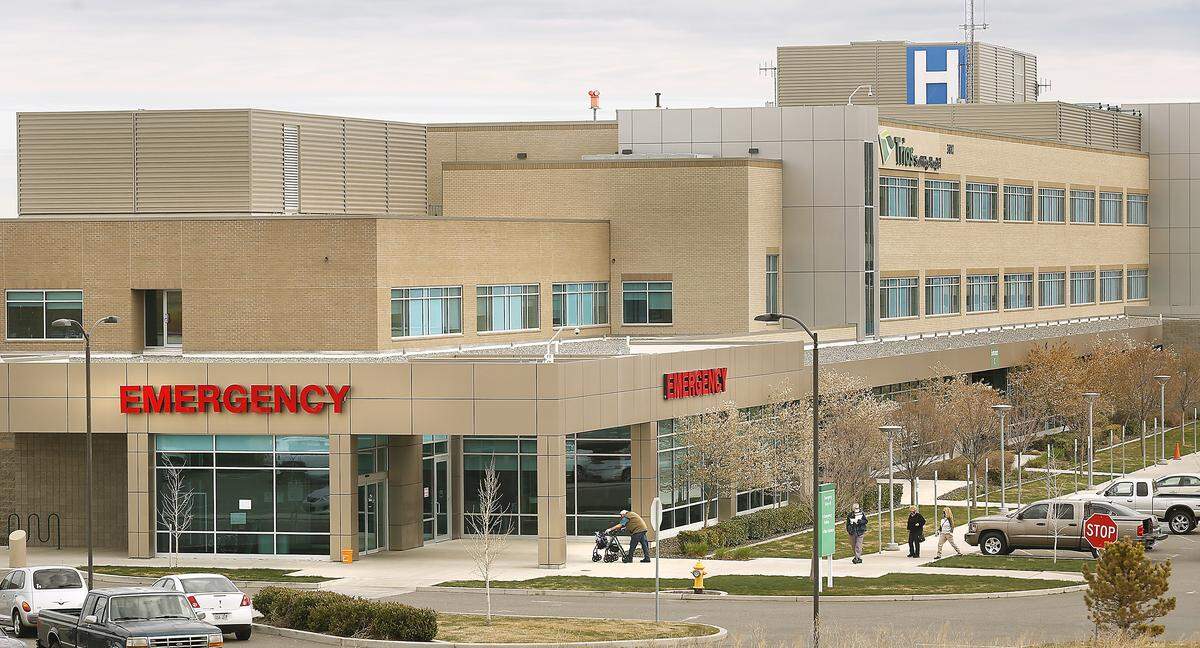
“It literally has felt like chaos,” one doctor said of the stress dealing with potentially positive patients.
“Every 10 minutes in the hospital is just like: four minutes of worry, two minutes of putting on PPE (personal protective equipment), and maybe two minutes of actual patient care, drenched in anxiety another two minutes.”
“People are going to get hurt on top of the people that are already exposed, and they’re going to ... (not) be able to take care of people.”
Benton Franklin Health District officials say they’ve been notified that 106 health care providers at Tri-Cities hospitals, nursing homes and clinics have tested positive, though details on where they work are not being released.
Some hospitals around the country have pushed back to claims that medical staff became infected while on the job, saying it equally could have happened during their off hours while interacting in the community or at home.
Local and state health district officials on Friday reported that 38 people have died in the two counties from complications of COVID-19. That number includes 27 deaths tied to senior care or retirement homes.
The Tri-Cities, with a regional population of 300,000, is considered a hot spot with the third highest known number of deaths in Washington.
That follows King County (2.25 million) with 320 deaths and Snohomish County (825,000) with 85 deaths.
BEHIND THE STORY
MOREWhy we did this story
As the coronavirus pandemic has spread through Washington state, few essential workers have been hit harder than the employees of hospitals. As a part of the Tri-Cities community, the Herald is committed to covering the COVID-19 crisis in a thorough, fair and detailed manner. That includes understanding the lives of people who are putting their lives at risk to protect others during the crisis.
Senior staff writer Kristin M. Kraemer spent four weeks talking with medical professionals inside Trios Southridge Hospital in Kennewick about the conditions faced during the coronavirus outbreak. She interviewed multiple sources on background and on-the-record, reviewed many text messages, emails and documents, and talked with Trios Health officials about staff concerns.
Some sources in this story are quoted without their names. The Herald generally avoids using anonymous sources, but exceptions were made for this story to protect these medical workers from possible retribution at work and in the community. We are grateful to everyone who told their story.
Click the arrow in the upper right for more.
Support local journalism
Investigations such as this are critical to our communities — and they take time to report. Please consider supporting local journalists with a subscription to the Tri-City Herald.
How to send tips and documents to our reporters
If you have a tip on a story that needs to be told, please let us know. Email news@tricityherald.com or call 509-582-1515.
Trios employees say that due to the unreliability of the tests, people have been removed from isolation and even left the hospital with a false negative test result. Yet it was clear to doctors and nurses the patient had been infected with the coronavirus based on their symptoms.
“That’s one of the things that I’m most frustrated about is how much faith we’re putting in this test. Like, us as physicians using our clinical acumen to try to diagnose is somewhat secondary,” said one employee, who described the onset of COVID in a person as “zero to 60 in 12 hours.”
“(A patient is) sitting here talking to me with a little bit of oxygen and 12 hours later you’re intubated. I don’t need a chest X-ray to diagnose you with pneumonia, but here we are talking about this test like a holy thing that can do no wrong.”
Trios ready for ‘unknowns’
While there are some reports that Washington state hit its peak in late March and King County has been stabilizing, some Trios workers tell the Tri-City Herald that’s not the case in Eastern Washington yet.
Cases and deaths in the Tri-Cities, Yakima and Spokane continue to climb.
Within the next couple of weeks, local health professionals say, it’s possible that Tri-Cities hospitals could see an influx, including patients considered in the vulnerable groups and people who previously tested positive and suddenly have trouble breathing or other severe symptoms.
Just this week a new trouble spot of local cases emerged at the Tyson beef processing plant south of Pasco.
One professional said it is believed patient numbers at Trios have dropped in recent weeks only because people are staying home trying not to go to the hospital with mild symptoms, and once they do they’re even sicker.
The Herald has talked for several weeks with some physicians and nurses in the trenches at Trios, and obtained memos and emails written by hospital administrators, including Trios CEO John Solheim.
All but one of the medical professionals asked not to be named or to identify their specific job titles for fear of reprisals, though the Herald independently confirmed their credentials and standing with the Washington state Department of Health.
They say hospital administrators warned them not to talk with the media about the pandemic or how Trios has responded.
“We’re talking to you because we care so much about the people we work with, how amazing they are, and because we care for others in our city,” one person told the Herald. “Here we are being failed by an administration that isn’t even from our community. Here we are just failing in one of the most important times.”
Officials at Trios were informed by the Herald that employees are worried about the hospital’s preparedness for the outbreak and ability to keep them safe, while still being effective.
Spokeswoman Lisa Larson said they recognize these are scary, unprecedented and uncertain times, “but we are all in this together.”
“Trios is prepared with the appropriate plans to detect, protect and respond to COVID-19,” she replied. “As we continue to plan and prepare for some of the unknowns, we want to assure our community that we have the right teams and the right processes in place to respond accordingly.”
False picture from test delays
Medical professionals believe the deadly coronavirus likely made its way to the Mid-Columbia by March 1, if not earlier since the first confirmed United States case was Jan. 21 in Snohomish County.
Official numbers released by the health district to the public continue to lag behind what Trios workers say they have been seeing. They know many more COVID-19 suspected Tri-Citians have died at the hospital or at home.
That’s because the testing has not been done on some people when it should have, or is so inaccurate that a second or third test is required before getting a positive result.
Health officials have said a shortage of testing supplies, such as the proper swabs to take the samples and transport medium tubes to help isolate the samples, also continue to be an issue in the Tri-Cities and has created a false picture of the pandemic locally.
Now, anyone who comes into the emergency room and is highly suspected of being presumptive positive is tested for COVID-19. Another test is done 24 hours later as a back-up. Test results typically come back within 48 hours.
Larson with Trios could only confirm that the hospital is testing patients when appropriate. She could not give specific details to the Herald about the number of positive cases and related deaths, saying that information is available through the Washington State Department of Health.
Larson also said the hospital is following guidelines from the Centers for Disease Control and Prevention and the state health department, and any medical professionals identified with potential exposure must follow appropriate protocols and instructions.
“These guidelines are communicated to our staff daily,” she said. “Everyone entering our hospital is screened for symptoms, including fever, upon entry.”
Supply shortage or adequate?
As for hospital equipment needed to protect workers and patients, the employees said their supply of N95 respirator masks was critically low with only several days remaining. That changed as patient numbers have slowed and some employees bought their own masks.
Those workers still in need are being given one mask per shift along with a lunch-size brown paper bag for storing the mask when it’s not on their face.
Nasal swabs needed to get biological samples from patients have run out, so staff said they have taken swabs designated for other testing purposes.
They have enough gowns “for a decent amount of time,” but know a shortage can be in their future as they are told that other LifePoint Health hospitals have started to reuse gowns.
The Kennewick facility’s supply of face shields, however, is healthy thanks to a recent donation from a community member, they say.
And hospital employees tell the Herald that the Tri-Cities is well equipped for ventilators at this point, reporting there are 73 available for patients in the region.
Trios replied that the facility currently has adequate supplies, medical equipment and capacity.
But, “we, like most other hospitals across the country, are worried about our resources in the event of a major patient surge,” Larson told the Herald. “We are taking steps to preserve our resources wherever possible, including postponing elective and non-urgent procedures.”
“Fortunately, we have the opportunity to leverage resources from our national parent company, and other hospitals in our companies’ network, if needed,” she added.
Pushing for safety
Dr. Ramon Anel, a full-time traveling physician, agreed to talk publicly about Trios colleagues and friends asking for his advice because he’s seen first-hand the state’s outbreak start in Western Washington.
He used to teach doctors-in-training, or residents, at Trios Southridge Hospital, and remains on the medical staff with privileges and has been asked to return in May to help with ICU needs.
“As you can imagine, (the coronavirus) is so dynamic that every day I have something new to share with (Trios colleagues). What I would do. What hospitals here (in Western Washington) are doing. What to watch out for,” he said in the earlier days of the outbreak. “They reached out to me and asked for help, and I just want to help them out.”
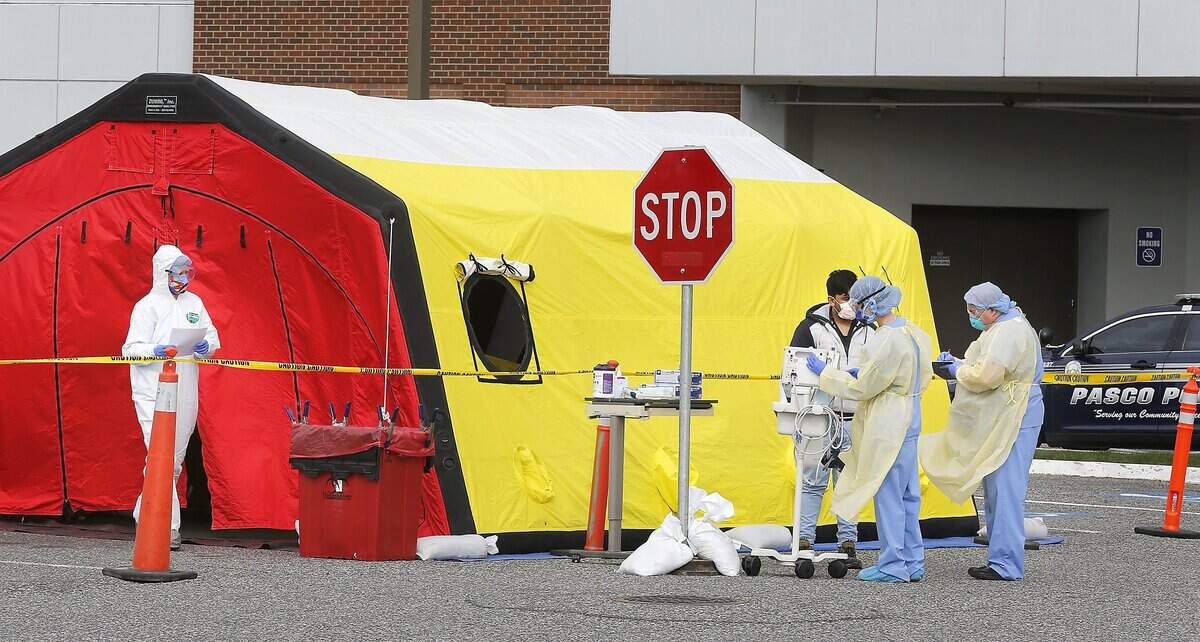
The concern, he said, is that local hospital managers have been slow to adapt and implement new treatment and safety protocols, including erecting a tent to screen patients outside the hospital or its urgent care center.
Lourdes Medical Center in Pasco, which also is owned by LifePoint, the emergency room at Kadlec Regional Medical Center in Richland and Kadlec Urgent Care Clinic in Kennewick all set up tents for screening, triage or testing to help keep suspected COVID patients away from other emergency and urgent care patients.
.JPG "AHi_j0246(2).JPG")
Officials announced last week that their volumes are down so most of the tents are no longer needed. However, the Kadlec clinic tent is still up for screening patients referred by doctors.
Trios has been using its urgent care center in Kennewick to screen patients. As for the hospital, Larson said the waiting room is large enough to keep people apart and they worried the strong winds in south Kennewick could be a problem for a tent.
Anel said he told the nurses and physicians to push back when it comes to safety measures and seek better protection, otherwise they won’t be available to treat more people.
“When you get to this scenario it’s almost like a mass-casualty epidemic scenario. Our firm oath is to protect patients, but at this time we also have to look at protecting the community,” Anel told the Herald.
“If in the process of protecting patients we risk exposing ourselves, and then also risk exposing the community to the lethal virus ... will I really do more of a service or disservice? I will save that one patient but also put how many more hundreds at risk?”
Nightmare is a reality
Anel and medical professionals who spoke to the Herald were critical of Trios leadership’s failure to share details on a COVID-specific emergency operations plan with staff.
They said they expected leaders to more quickly lay out specific guidelines for using protective equipment and the care for patients with key COVID symptoms or in respiratory distress, whether or not the patient is a confirmed positive case.
That includes the need for hospitals like Trios to share its emergency operations plan, updated for the COVID pandemic, with all staff so they understand the policies and procedures that must be taken at this time when using protective equipment and dealing with suspected positive patients, he said.
Staff also has needed proper training on how to do the nasal or oral swabs specific to this coronavirus test, to avoid a false negative, and to have a clear understanding of just who is doing the tests.
Medical professionals say there was confusion for a while about who was responsible for administering them.
“To be honest, it’s been a s--- show in there,” said another medical professional. “Nobody has any idea what they’re supposed to be wearing or doing, and things are getting heated. I’ve never experienced anything like this before.”
“It’s so hard to even understand what’s going on unless you’re there, and even when you’re there you can’t even fully comprehend that this is happening to you,” added a colleague. “It’s such a surreal situation to not be in control of anything, not even your own life.”
They said it feels like being in a nightmare that you really want to wake up from, only then to discover it is reality.
Trios, when asked about its emergency plan, told the Herald it had been working around the clock with physicians and infection prevention specialists to prepare for the pandemic before it hit the Tri-Cities.
That involved “building upon the robust emergency operations plan we have in place and train for year-round,” said Larson, the spokeswoman.
.JPG "AHi_j0063(3).JPG")
At a news conference last week with the Benton Franklin Health District, Larson said Trios administration and its COVID Response Team has been watching the events on the west side of the state, learning from their lessons and making changes here ahead of time.
“We are very comfortable in what we’ve done in terms of preparing for any oncoming surge, should there be one,” said Larson. “But the good news is in both hospitals, for Lourdes and Trios, we’ve seen a significant drop in patients coming to the (emergency department) and the urgent care and we’re hoping that’s indicative of people who are less sick. We hope that that continues to be a trend.”
Death toll grows
Trios workers tell the Herald that their hospital alone has seen 15-16 patients die who tested positive while in the hospital, and five to 10 more who were positive and left for end-of-life care at a nursing home or in hospice.
They also believe at least seven more patients who were negative, but died in the hospital after complaining of shortness of breath, likely were COVID-19 victims. But no follow-up tests were done after they died.
Of those who died at Trios, all were in their 70s or older, the hospital staff say.
However, they have treated a 40-year-old and people in their 60s for COVID-19, and believe they will see younger patients if people don’t continue to follow stay-at-home orders.
“It’s like looking through binoculars that are not set for your eyes and all you see are silhouettes, so you can sort of see what is happening but not a clear evolution of this,” said one physician.
“At this point this is like an American problem. It’s not a Trios problem, it’s not a Kadlec problem, it’s not a LifePoint problem,” the doctor added. “It’s an American problem and the only way all the Americans in this area can get the best outcome is if we all work together.”
Relaxing your quarantine, especially too soon, could lead to a second wave of infection, said another Trios health care worker.
“It’s not worth it. It’s only a month maybe of your life that you’re going to have to stay more indoors and around people,” said the employee, “but it’s for a lifetime of health afterwards.
“It’s an all or nothing thing. All of us have to do this or it’s futile.”
This story was originally published April 17, 2020 at 4:15 PM.