
‘It’s been chaotic.’ What’s hot and what’s not for Tri-Cities homebuyers
AI-generated summary reviewed by our newsroom.
- Tri-Cities housing starts rose in 2025, with 1,203 single-family permits issued.
- Inventory climbed above 1,100 while median sale price held near $425,000 in September.
- Kennewick and Richland drove permit gains, while Pasco and Franklin posted declines.
The Tri-Cities usually bucks national housing trends.
Thanks to the stabilizing influence of federal spending at the Hanford site and to the food processing industry, Tri-Cities home sales and construction tend to plod along, even as they slow elsewhere.
And 2025 appears to be no different.
As the year comes to a close, local housing starts and other traditional indicators of the health of the residential market remain generally strong, or at least steady.
Even as the National Association of Home Builders/Wells Fargo Housing Market Index showed that builder sentiment remained in negative territory in November, Mid-Columbia builders kept building.
Locally, builders secured more permits to build homes in the first 11 months of 2025 than during the same time in 2024.
“It’s been chaotic,” said Jeff Losey, president of the Home Builders Association of Tri-Cities, a sentiment echoed by some of the area’s most experienced real estate brokers.
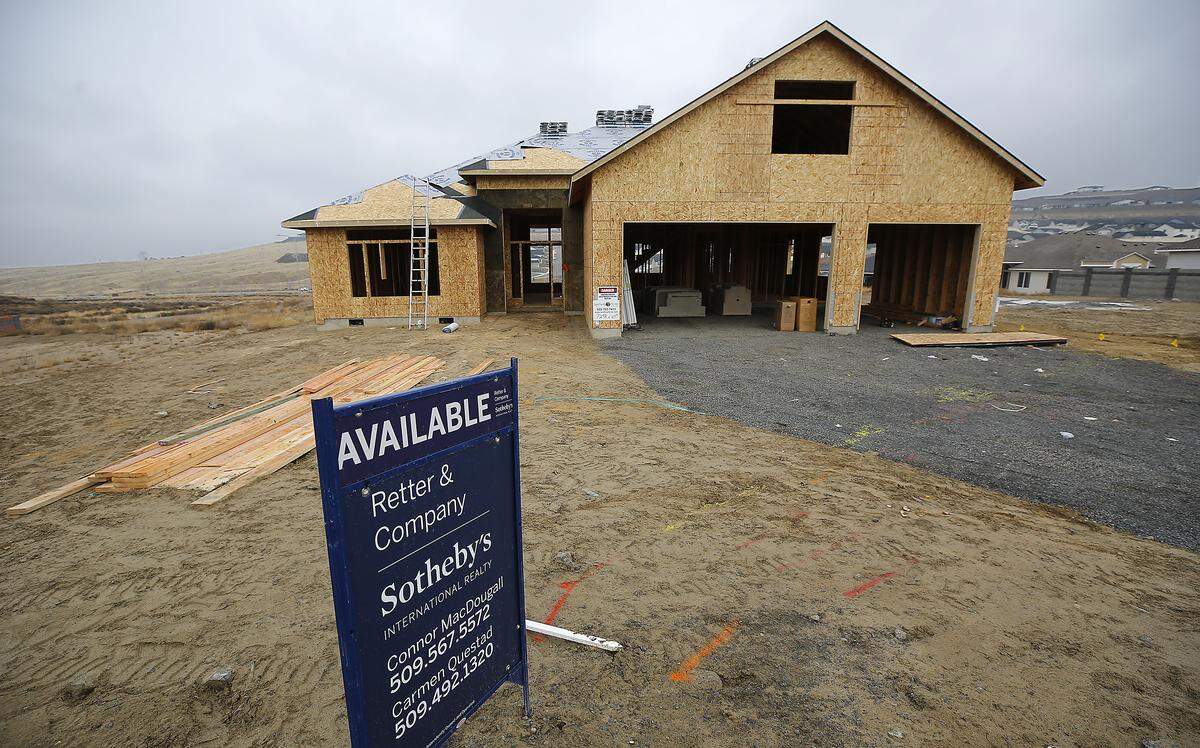
Median price
In contrast, the National Association of Realtors said nationally, existing home sales rose nearly 2% in October compared to a year prior. However, the picture in the West was less rosy. Western home sales fell 2.6% over the same period, with the NAR blaming high home prices on the West Coast.
Regionally, the median home price was $628,000 in the Western U.S.
Locally, the median stood at $438,500 in October, up $8,000 from a year ago, according to the most recent figures from the Tri-City Association of Realtors.
At the same time, the inventory crept up to 1,100, from 854 a year ago, and it took an average of 29 days to sell a house, four more than a year ago.
“The Tri-Cities keeps bumping along, as we always do,” said Dave Retter, owner of Retter & Co. Sotheby’s International Realty.
Dennis Gisi, owner and broker for the Pasco office of John L. Scott, said the signals are confusing.
He said there is a misconception that with more homes for sale, buyers have leverage to make below-asking offers, figuring sellers have to accept them.
“That’s not true. There’s really no such thing as deep discounts.”
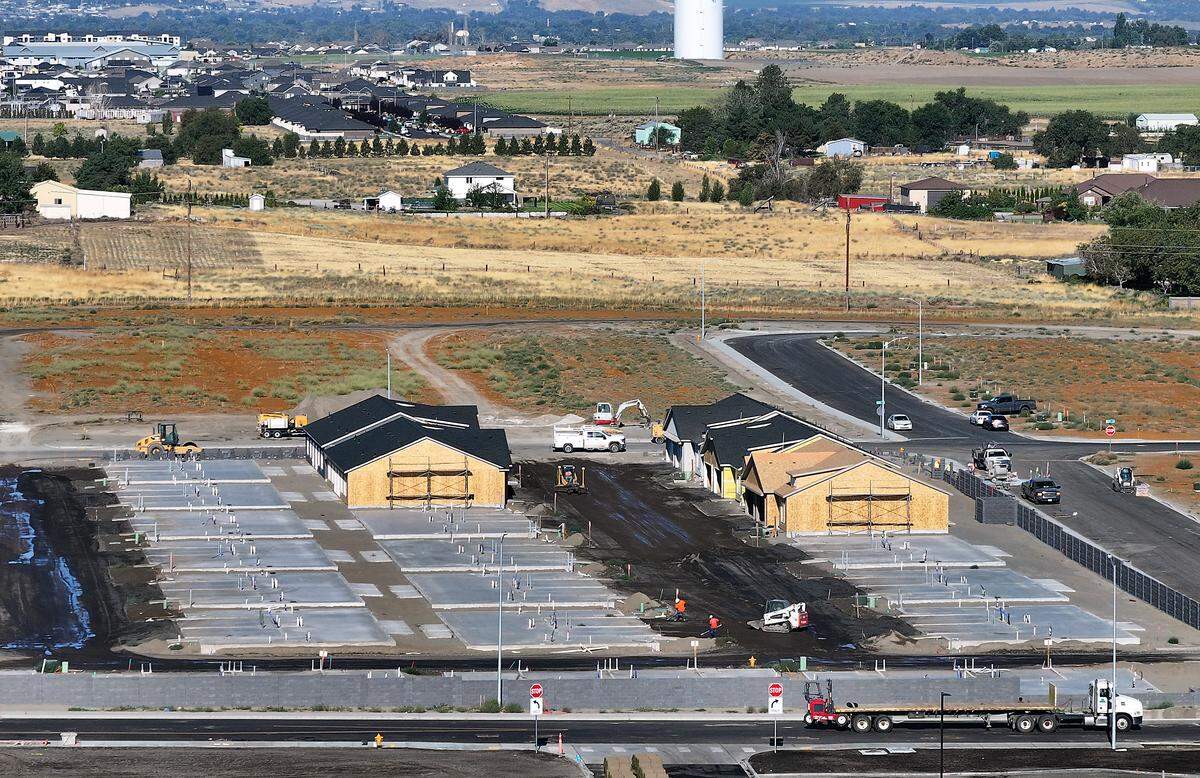
1,200 building permits
New home construction rose slightly in 2025 as local cities and counties issued 1,203 permits for single-family homes through November. That’s 22 more than the same period in 2024, according to the HBA.
Losey called it a “strange year.”
Builders wrestled with a new administration and the new policies that included tariffs on imported building materials. That only exacerbated ongoing supply chain issues that delay deliveries.
Losey said building material prices rose even before tariffs took effect.
The growth in home construction was confined to the Benton County side of the Columbia River.
Pasco, long the region’s hot spot for new home construction, saw activity drop by more than 14%, with 258 new homes authorized, compared to 301 a year earlier.
Franklin County, too, posted a decline, issuing 52 permits compared to 57 a year earlier.
Losey said the possible trend in Pasco could be worrying. The city typically accounts for a third of all new home permits.
“If Pasco goes, usually the numbers go with it,” he said.
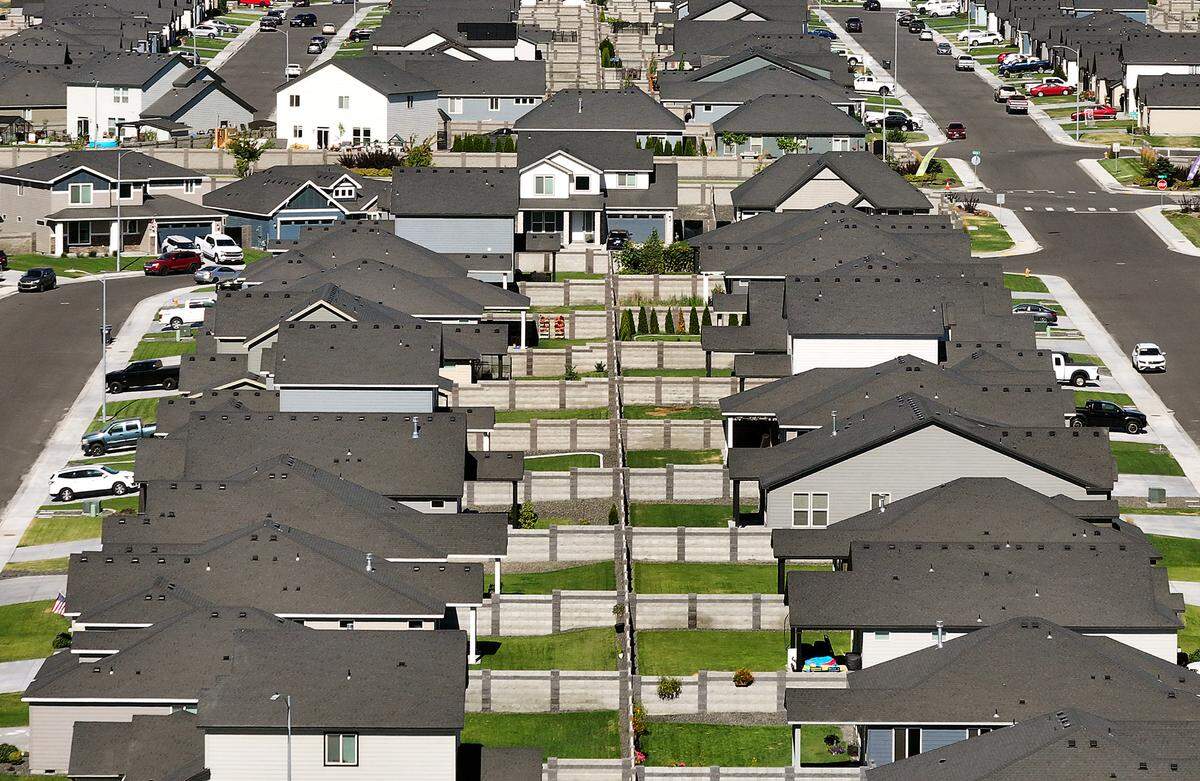
Southridge is hot spot
Increases in Kennewick, Richland and Benton County kept that from happening.
Kennewick led the Tri-Cities for new home starts, with 320 new permits, up 13%.
Richland was second, with 292 permits, up 10%. West Richland issued 92 permits, an increase of just one.
There are any number of reasons why one city may be up and another down, usually related to the availability of buildable lots.
Anthony Muai, Kennewick’s planning director, said is city’s strong performance reflects availability of home sites in the Southridge area, and its work to streamline its permitting system. Its “express” permit process is popular with builders eager to move fast.
“It’s a combination of the availability of lots and the way that we strive to do business,” he said.
Thompson Hill and the Bob Olson Parkway area of Kennewick’s Southridge is the hot spot for new development. The SouthCliffe, Apple Valley and Sherman Heights subdivisions still have home sites.
Too, infill sites favored by town home developers are adding new residences in old neighborhoods, including central Kennewick and on Canal Drive.
As the existing developments fill up, more are in the wings.
The pipeline incudes new projects such as Desert Sands on the north side of West Clearwater and Urban Trail, a mixed-development planned near Desert Hills Middle School.
Muai expects his team to stay busy in 2026.
“I anticipate it to continue at the same level,” he said
Kennewick invites residents to share their thoughts on housing as it updates its community plan.
What’s for sale?
There were about 1,100 homes for sale in the Tri-Cities in October, according to the most recent statistics.
That’s long been considered the level at which the market is balanced between buyers and sellers. But Dennis Gisi said that number is out of date.
As a builder in the late 1990s, he said he would speed up home construction when the listings got to 1,200 and would slow down at 1,600. At the time, the local population stood at about 192,000. Today, it is closer to 320,000. It would take more than 1,200 new or existing homes for sale to meet the need.
“We have a shortage. We have jobs. We just don’t have a place to put them,” he said.
With housing growing slower than population, prices continue to inch up.
Retter, of Sotheby’s, said home price appreciation has averaged 4.5% over the past 45 years, including 1989 and 2021, banner years for home prices.
That’s standard for the market.
“We’ve always maintained between 3% and 5%. That’s what we do” he said.
Retter said the market isn’t slowing as the holidays approach.
There were 575 sales in October and November, collectively worth $27.65 million. That compares to 580 sales in 2024, when the combined value was $27 million.
“In my 46 years, as long as there is no snow on the ground, there are always people who need to, want to or have to buy a house,” he said.
Interest rates
Mortgage interest rates offered by Tri-Cities lenders for a 30-year fixed mortgage ranged from 5.99% to 6.5% based on a survey of banks and credit unions with branches in the market.
The Federal Reserve reduced the federal funds rate by 0.25% this week to its lowest level since 2022, a move market watchers hope translates into lower borrowing costs for homebuyers.