
Big, bold vision could reshape West Richland, add 100K residents over 100 years
AI-generated summary reviewed by our newsroom.
- Draft plan could add 100k residents to West Richland over the next century
- Three options propose various densities for 7,600-acre Lewis & Clark Ranch
- Full development requires new water rights, sewer capacity and infrastructure
A bold vision to develop West Richland’s sprawling Lewis & Clark Ranch into an urban area could add nearly 100,000 people to the rural city over the next 20-100 years.
The heirs of the late Frank Tiegs, an influential Pasco potato and real estate visionary who died in 2024, hit a major milestone this month.
Thursday, West Richland released the draft of an environmental impact statement that gives three options to develop Lewis and Clark Ranch, the 7,600-acre crown jewel of Tiegs’ real estate empire.
The 1,073-page document, called a DEIS, is required under Washington’s State Environmental Protection Act.
The city kicked off the review in 2022. Once adopted, it will shape growth for generations to come.
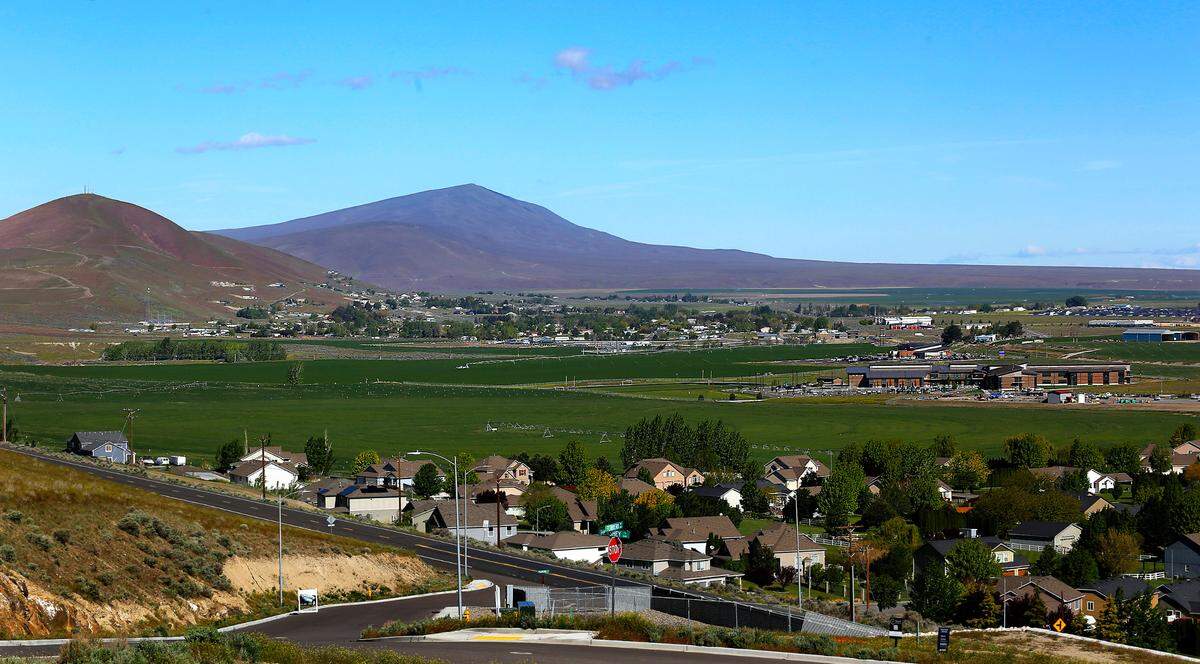
Impact is huge
At its heart, the document offers options to guide the process of transforming irrigated farm circles into a mix of housing types, retail, business, commercial and public spaces, including schools, parks and open spaces.
“The impact is huge, but in a good way,” said Eric Mendenhall, director of the city’s planning, parks and economic development division.
He has worked with Frank Tiegs LLC and an army of consultants to answer the myriad of logistical questions outlined in the lengthy report.
It gives the West Richland’s elected city council three options: Leave the current land use rules in place, embrace the Tiegses’ vision of a dense development or embrace a modified version that echoes the Tiegses’ vision but with less density.
The city and the land owner share a common vision for Lewis & Clark Ranch, Mendenhall said.
Both want smart, thoughtful growth that promotes the “15-minute” concept of living, working and playing in an area without the need for much driving. Mendenhall cited Richland’s Badger South as an example. Residents can walk to Country Mercantile from their homes, he noted.
Mendenhall said Lewis and Clark Ranch offers West Richland the chance to transform itself from a sleepy bedroom community to one that not only offers much-needed housing but attracts commerce.
Commercial properties pay more in property and other taxes, propping up municipal coffers and pay for parks, police, fire and other public services.
“If cities aren’t growing, they’re dying,” Mendenhall said.
Water, water, water
The planning document offers a major caveat: West Richland must secure new drinking water sources and expand its sewer capacity.
“Due to regional water constraints in the Tri-Cities area, securing sufficient new water rights remains uncertain. Without adequate water, full buildout of the study area may not be possible,” it says.
Lewis and Clark Ranch has rights to irrigation water, which would form the basis for an irrigation district that would provide non-drinking water to the entire area. That preserves the city’s drinking water supply for faucets, not lawns.
The West Richland City Council will decide on the next steps by December, after the public has a chance to weigh in.
That process starts July 10, when the city’s planning commission holds an open session in the city council chambers on Belmont Drive.
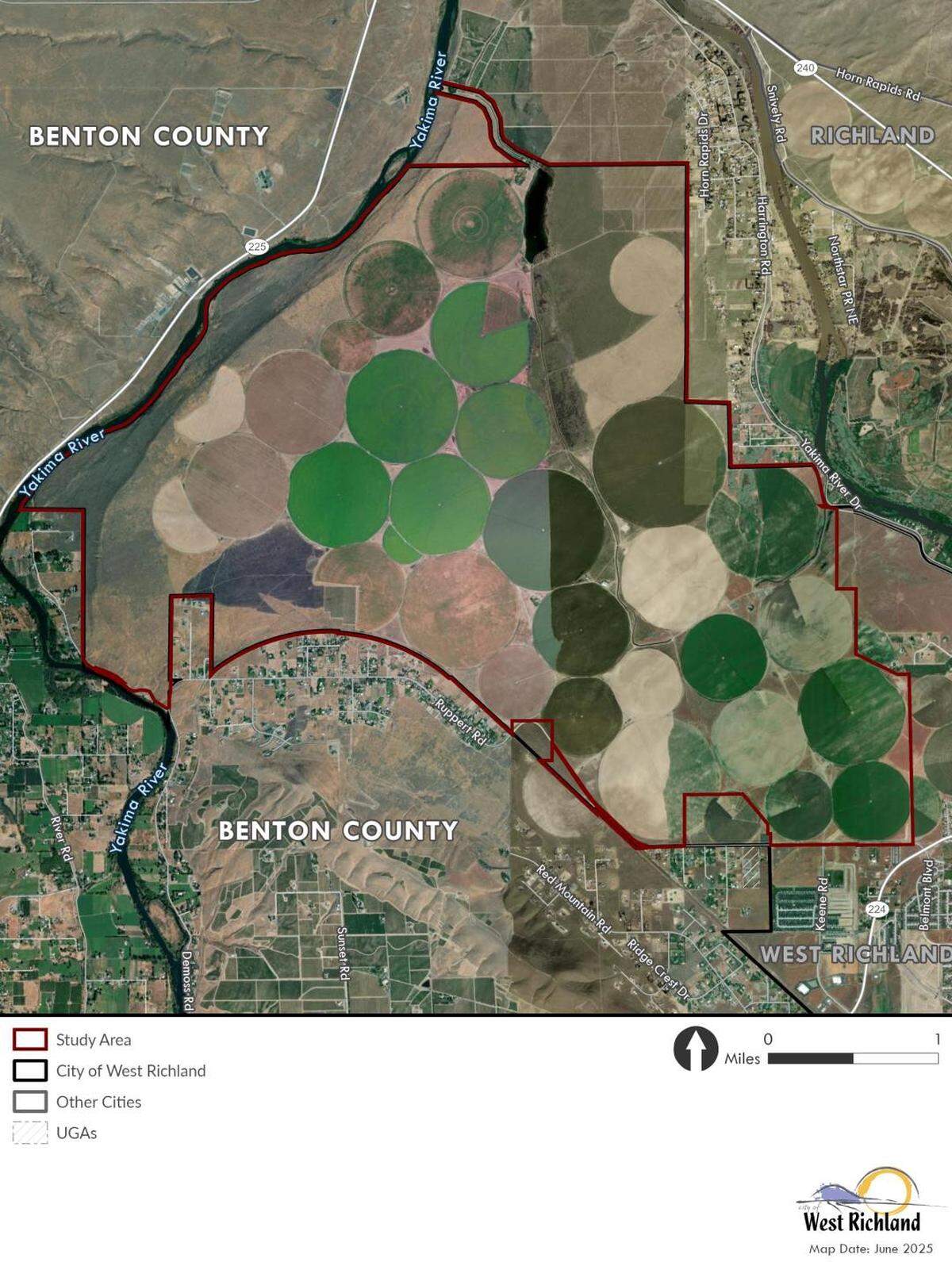
Lewis & Clark Ranch
Frank Tiegs LLC, led by heirs Keith Tiegs and Janet Tiegs, controls a collection of parcels that account for about half the land mass of the city of West Richland, population about 18,430, according to April estimates from the state.
The city annexed much of the ranch in 1981. It is chiefly used for farming, with aerial maps indicating it is covered with irrigated farm circles.
It follows the Yakima River south to Ruppert Road and includes a man-made lake created in the 1970s as well as extensive waterfront along the river.
Any development will have to account for a small area of protected shrub steppe habitat as well as sensitive archaeological sites, among other impacts.
The alternatives
Alternative 1 — “No action” alternative leaves current plans and development regulations in place. State rules require a “no action” option in the environmental review process.
The document warns West Richland could lose control of its future if it takes no action, which would allow future development under the existing rules.
“Development may move forward without a unified plan, resulting in inefficient land use, unanticipated infrastructure challenges and missed opportunities for habitat conservation and open space preservation,” it warns.
Alternatve 2 — Frank Tiegs LLC wants to amend West Richland’s comprehensive plan and zoning map for its property. The impact would be more than 20,300 jobs, nearly 34,000 residential units along with commercial and public facilities when the area is fully developed, a process that could take 20 to 100 years.
The proposal includes a first phase, which would cover about 750 acres with 4,000 housing units, 3,000 jobs and nearly 11,000 residents. A housing unit refers to all types of homes — apartments, condos, townhomes, single family homes on small lots and larger lots.
The street network would be based on the city’s current street standards and would support the “15-minute” live-work-play vision.
Alternative 3 — The city’s “reasonable alternative” is based on feedback from the 2022 meetings. It echoes the Tiegs LLC plan but with slightly less development and a modernized street vision.
It would have slightly reduced density — about 2,100 jobs and 3,500 housing units in the first phase, and about 18,300 jobs and 30,500 residential units, at full build out.
The alternative specifies a linear park and open space along the McWharter Canal on the property and requires steps to conserve the Yakima River shoreline and provide public parks near the water.
Who pays?
“Development pays for development is the motto in West Richland,” Mendenhall said.
To date, Frank Tiegs LLC has paid most of the cost for consultants whose work shaped the document.
Developers pay impact fees for roads, transportation, water and sewer systems. The document contemplates adding impact fees for schools and other public amenities.
Costco Wholesale is a telling example of developer-paid costs.
The warehouse giant is — famously — building its second store in Richland’s Queensgate area, near the Richland/West Richland border.
Costco paid impact fees to upgrade several West Richland intersections after its own traffic report showed they would be affected.
Costco money is paying to update the intersection of Kennedy and Keene, where Kennedy will be widened and the turn signals will be reprogrammed to improve traffic flow..
Costco money also helped pay for a new traffic signal at Bombing Range Road and Dallas/Kennedy.
Learn more
West Richland residents will get three chances to learn about the project and share their views with city leaders in July. All meetings are held in the West Richland City Council chambers at 3100 Belmont Blvd.
- July 10: West Richland Planning Commission holds a community meeting and open house from 6-8 p.m.
- July 22: West Richland City Council and Planning Commission joint session to discuss Alternative 3 at 5:30 p.m.
- July 31: West Richland City Council and Planning Commission special meeting, public hearing on city’s preferred alternative, 6-8 p.m.
Written comments are due by 5 p.m., Aug. 4, and may be directed to Eric Mendenhall, City of West Richland, 3100 Belmont Blvd., Suite 104, West Richland, WA 99353.
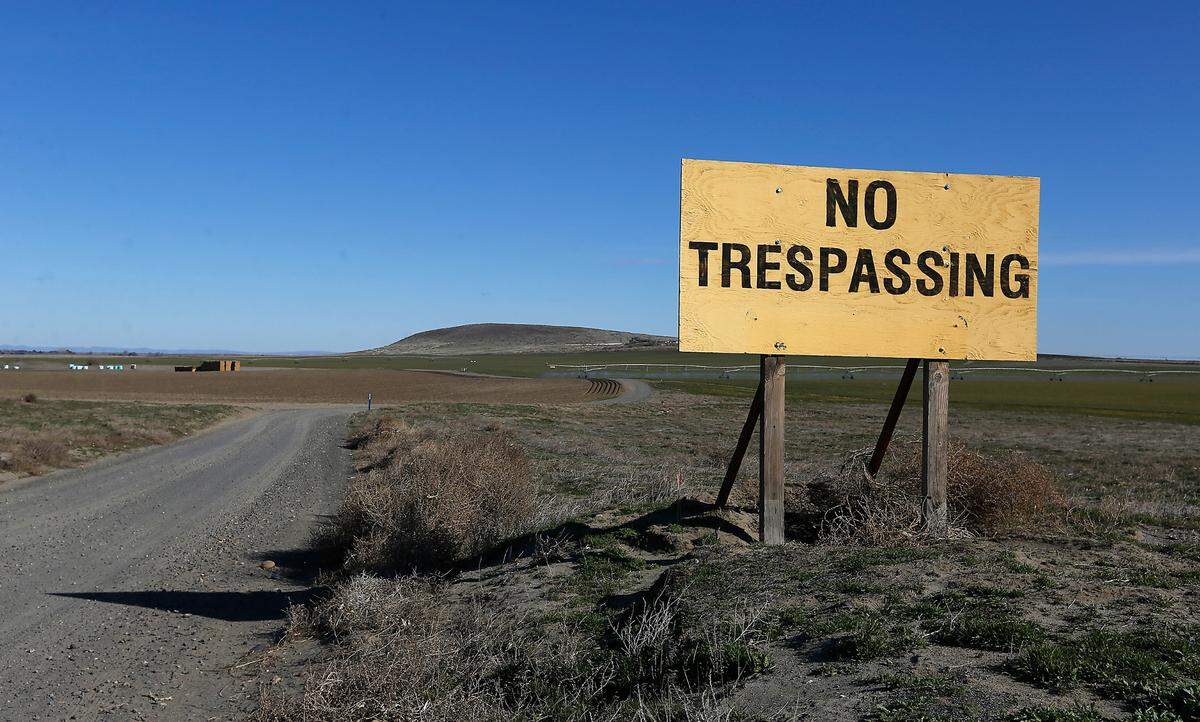
Busy neighborhood
It’s no secret West Richland is a hotbed for residential construction. There are two major developments in progress near the Lewis and Clark Ranch property.
The Heights at Red Mountain Ranch is a 184-acre development south of Ruppert Road, near the ranch. It includes 558 homes, 226 apartments and is 75% developed.
The Bluffs is a 104-acre property that will feature 406 single family homes northwest of The Heights. The city gave preliminary plat approval in May.
Do your research
The city of West Richland posts information and documents about the Lewis and Clark Ranch project on its website. Go to westrichland.org.
This story was originally published July 7, 2025 at 5:00 AM.