From new tools to innovation, farmworkers help shape the future of WA’s apple industry
When Semillero de Ideas launched its second annual farmworker innovation challenge, Patricia and Gabriel Oropeza felt empowered to share their ideas and knowledge about Washington’s agriculture industry.
The Pasco-based nonprofit invited farmworkers to submit their original ideas for ways to improve production of Washington’s most valuable crop — apples.
Over the last six months, more than 100 farmworkers in Washington and Mexico formed small teams and came up with ideas for the challenge.
Patricia has worked in fruit orchards in Washington for decades. She and her husband Gabriel are year-round domestic farmworkers who live in Wapato.
For the innovation challenge, Patricia and Gabriel crafted a prototype for a tree-thinning tool. They were recently announced as one of the winning teams.
Patricia told the Tri-City Herald that the tool would help increase efficiency, ensure the quality and size of apples, and reduce waste by preventing fruit from dropping to the ground. She’s already using it to prune trees in orchards where she works.
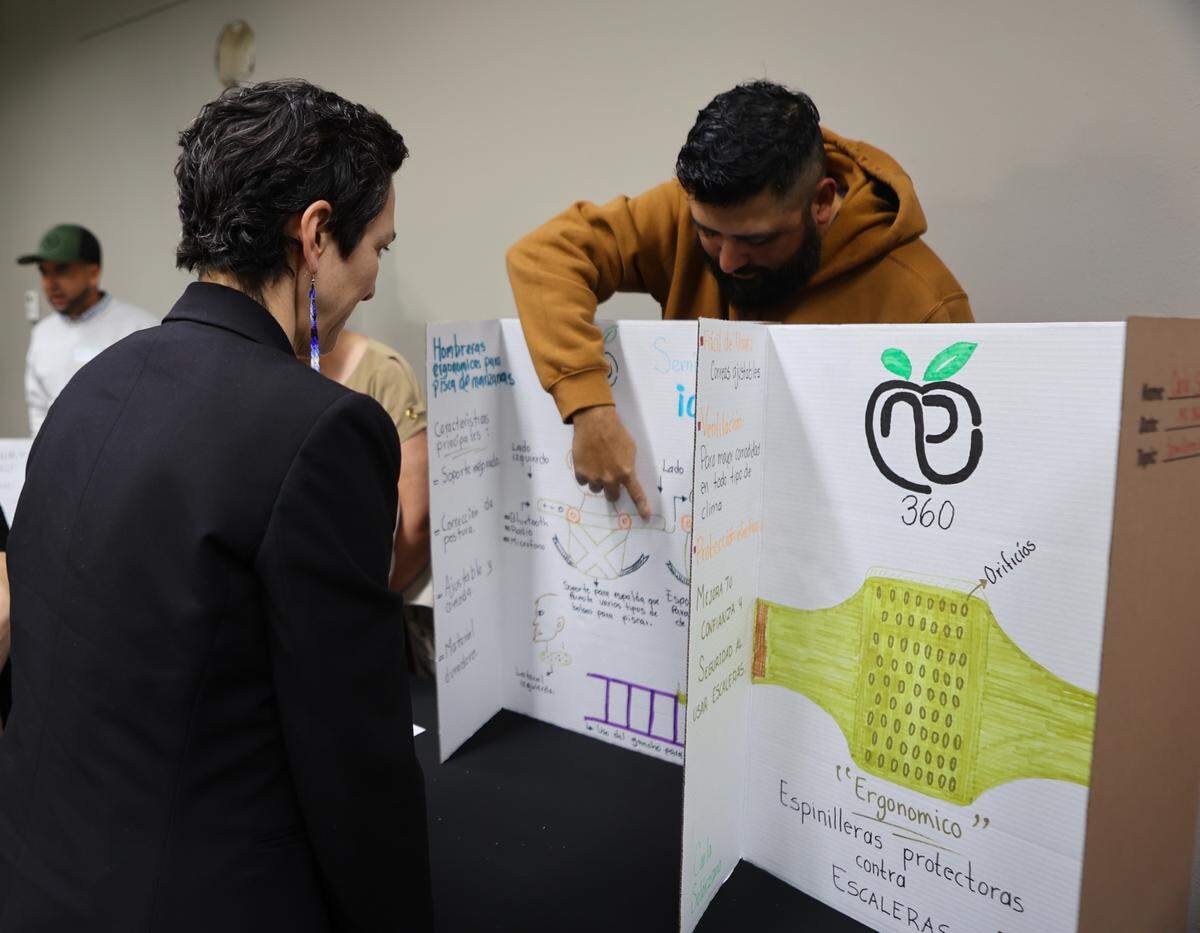
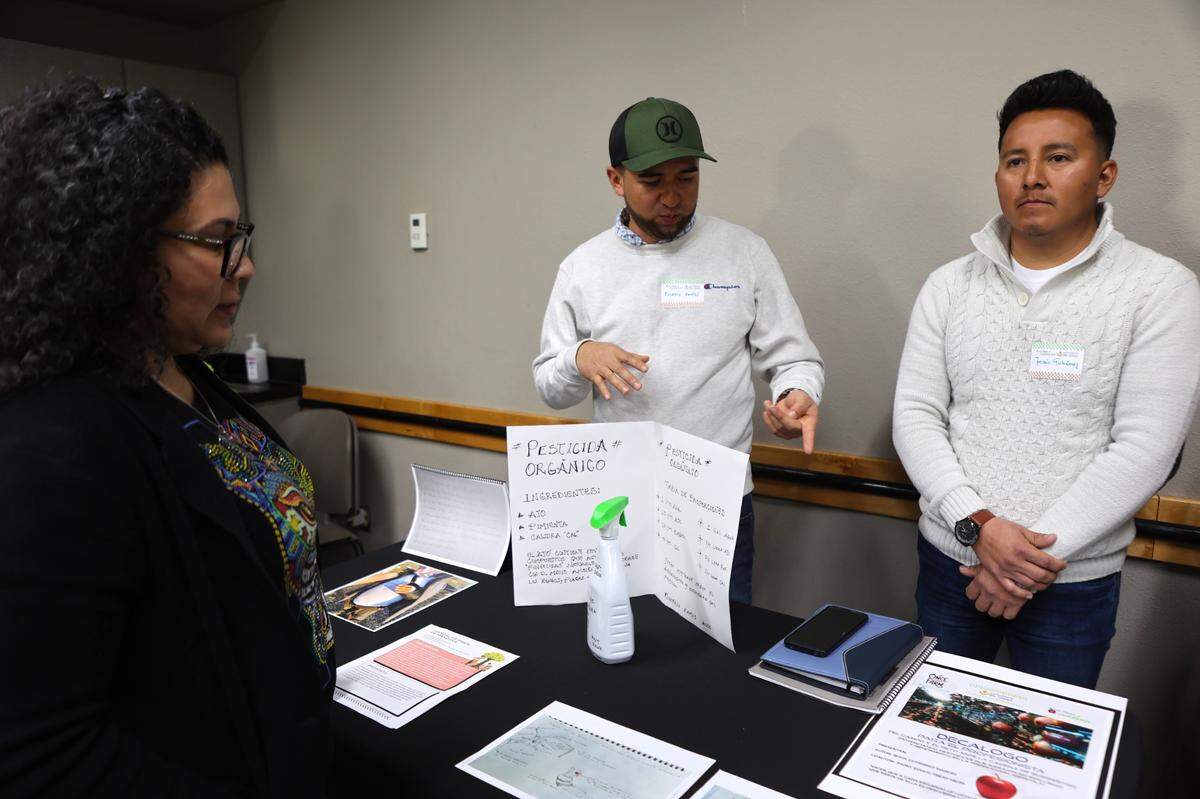
The challenge inspired other ideas, including a ladder designed to be more safe for workers and training guidelines for H-2A guest workers.
Farmworkers proposed methods and tools that address different industry needs, from making apple harvest more efficient to addressing environmental sustainability to improving worker safety.
Farmworkers as knowledge workers
Washington is the top apple-producing state in the U.S. — growers produce seven out of every 10 apples eaten across the country.
The fruit represents $2 billion of the state’s agricultural value.
Centered in and around Yakima and the Tri-Cities, Washington’s agriculture industry depends on domestic farmworkers who are year-round residents, domestic migrant farmworkers who travel within Washington and between states, and H-2A guest workers.
H-2A workers travel to the U.S. to provide seasonal, temporary labor. They come from many countries, but mostly from Mexico to work. They have H-2A visas and return to their home countries at the end of their work contracts.
In apple orchards, workers prune and thin trees in winter and spring, and pick and pack during fall harvest.
Some have more than 20 years of experience in agriculture and hold valuable knowledge.
That’s where Semillero de Ideas saw an opportunity.
“Farmworkers are much more than people who perform physical labor,” said Executive Director Erik Nicholson.
Nicholson was the national vice president of the United Farm Workers union from 2002-20.
“Many times they bring generations of knowledge into the (agriculture production) process,” he said. “Yet there is no space for that knowledge to come into the process. That’s what we’re trying to change.”
Tools from the orchards
Semillero de Ideas held simultaneous award ceremonies in Pasco and Jocotepec, Jalisco, Mexico, outside of Guadalajara, in early March.
The winning ideas were:
- A pulling mechanism for tarps and canvas
- Pollinator habitats for bees
- An extendable tree-thinning and harvest tool
- An H-2A worker training manual
- A ladder with a supporting chain and anti-slip tape
Participation in the apple innovation challenge more than doubled compared to last year’s contest, which focused on the cherry crop.
Moving forward, the five winning teams receive additional support from Semillero de Ideas and other partners to develop, produce and put their ideas into practice.
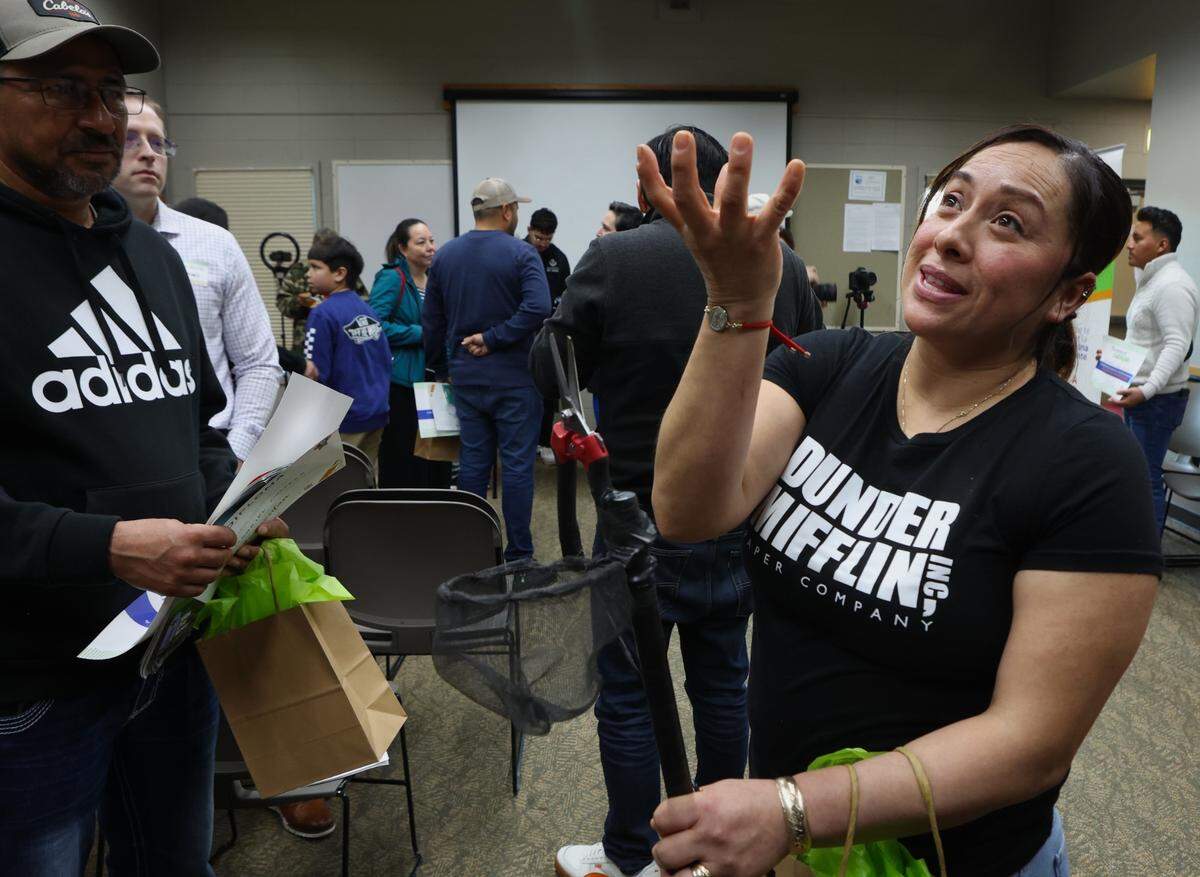
Patricia and Gabriel won $2,000 for their prototype — a tool with clippers and a small basket attached to one end. The tool can be extended to prune high branches and more precisely reach fruit that is ready to harvest.
“After 23 years working in agriculture, I’ve gained skills and expertise,” Patricia said in Spanish. “Even though it may seem like simple work, it’s not. There’s a lot of things we do to protect our own safety and ensure the quality of the apples.”
“Some people believe that (farmworkers) are not important,” she said. “But without pickers, the fruit will rot.”
“It can be a tiring and undervalued job. But I like working in the fields because of the freedom and time I get to spend in nature.”
Last year, Luis Barrera, a Mattawa-based H-2A worker from Nayarit, Mexico, won a $1,000 prize for his cherry-picking harness idea that reduced worker injury and stress while improving productivity. Semillero de Ideas has been helping Barrera patent his innovation and get his product to market.
Barrera and his wife, Dulce Anahi Cortez Melecio, won $1,500 this year for their idea — adding safety improvements to ladders used in apple orchards.
Barrera said in Spanish that worker safety would improve if ladders had a supporting chain and anti-slip tape on each step. He knows many workers who’ve fallen off ladders in fruit orchards and broken their arms or had other serious injuries.
Guidance for workers
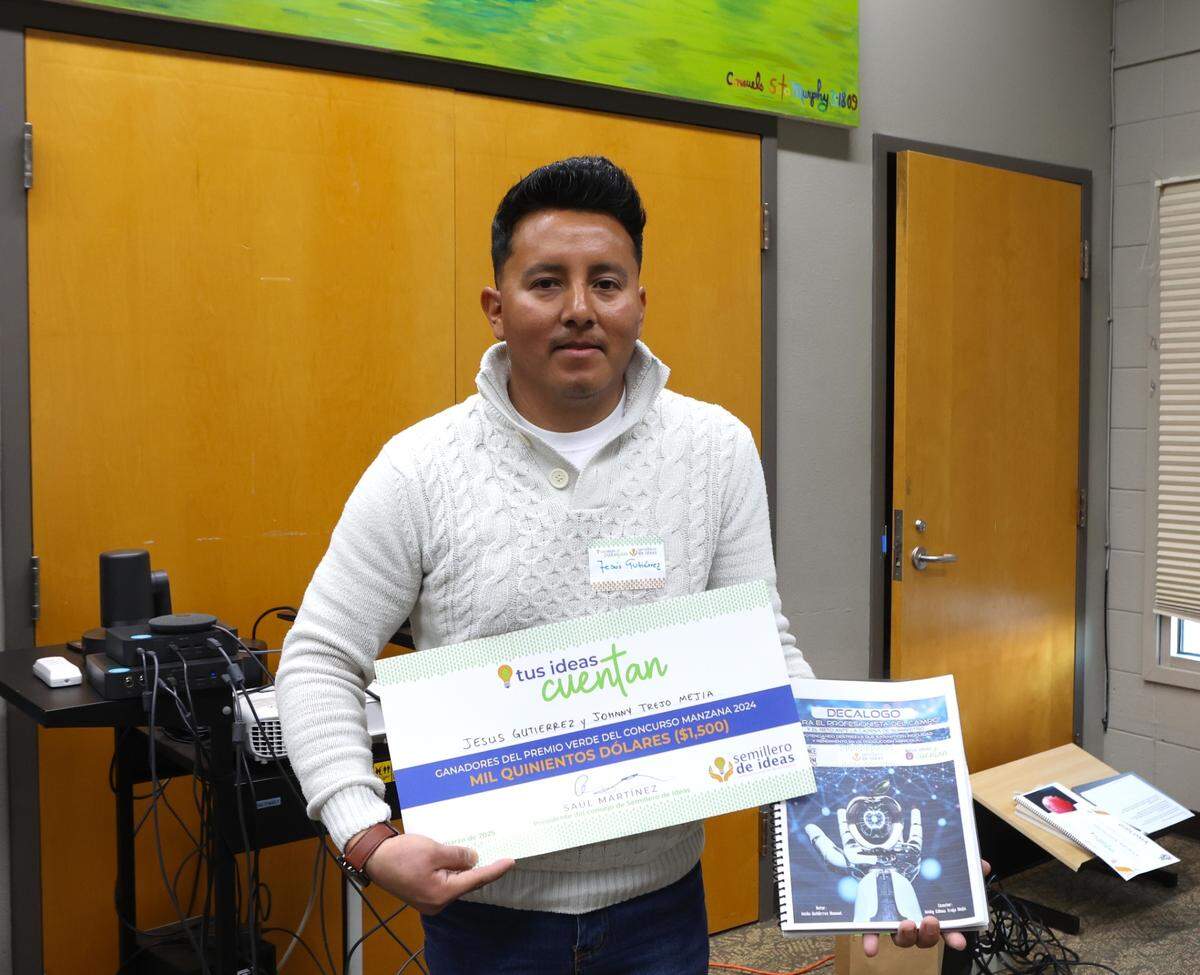
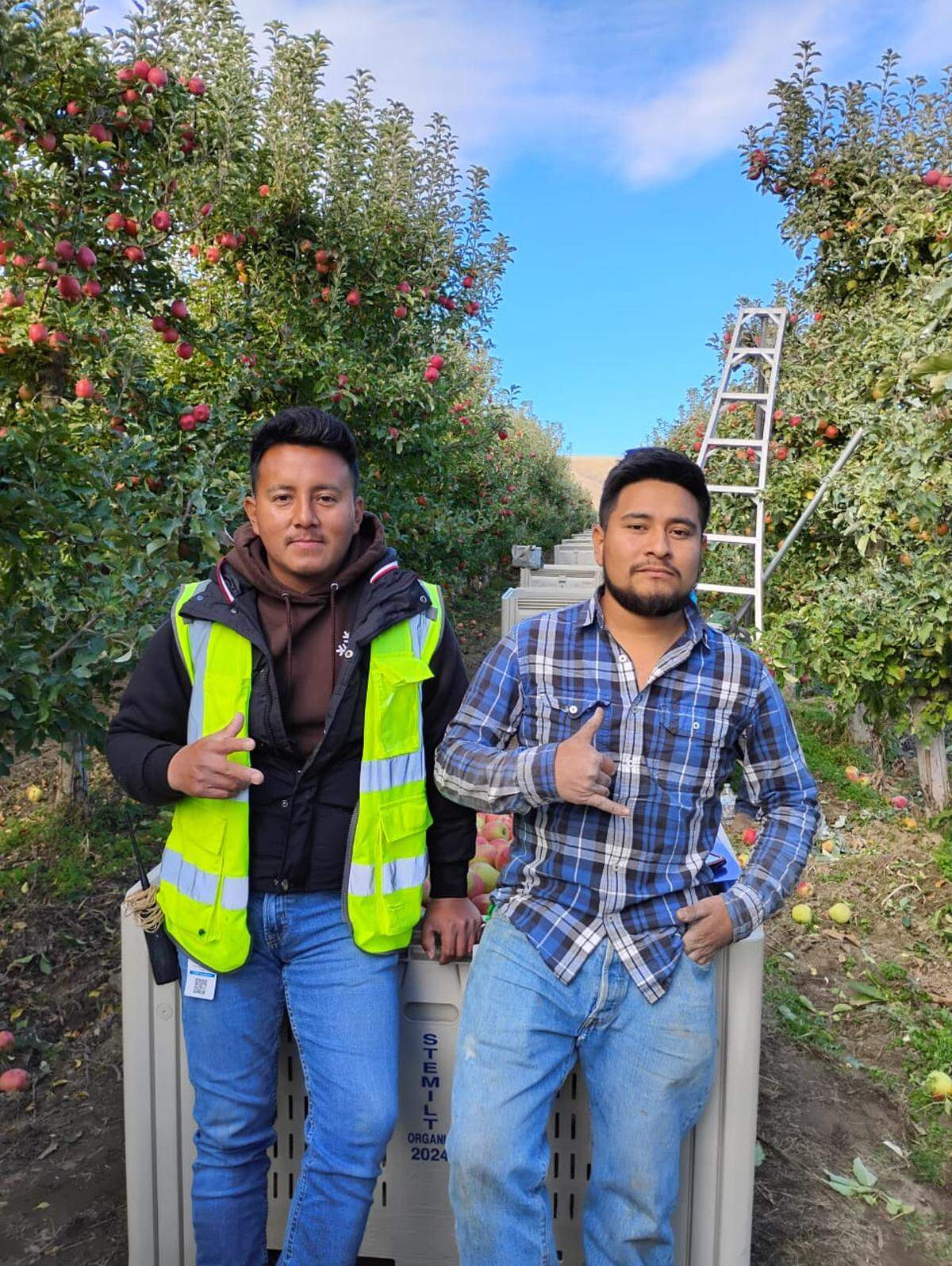
Jesús Gutiérrez is an H-2A worker from San Luis Potosí, a state in north-central Mexico. He is contracted to work for Wenatchee-based Stemilt, one of the major fruit growers and packers in the U.S.
Gutiérrez won a $1,500 award for the 10-point training proposal for H-2A workers he submitted for the challenge.
He started working in Washington in 2019, first as a picker. Over time, he’s learned about local fruit orchards and already helps train other H-2A workers in Mexico and Washington.
“Farmworkers are part of the agriculture industry, yet have very little visibility. It’s usually difficult for us to share ideas with our supervisors,” he said in Spanish.
“Semillero de Ideas is giving us a platform. This contest is an opportunity for us to share knowledge, connect with each other, transform, innovate, inspire and help improve agricultural practices.”
In the town of Matlapa in Mexico, Gutiérrez ranches with his father and other family members who have raised cattle for three generations. He’s also worked in community healthcare, helping children with disabilities and adults with mental health issues.
He said that he was earning the equivalent of $30 in two weeks working in Mexico. He decided to find a job as an H-2A worker to increase his income and be able to support himself and his family.
Gutiérrez travels from Mexico to Washington using an H-2A visa. This year, he arrived in February and will work through November before he returns to Mexico.
He’s currently leading 20 workers in orchards in Mattawa where they produce apples, cherries, nectarines, peaches and pears.
About the nonprofit
Semillero de Ideas has received support from the Worker and Farmer Labor Association, the Washington State Tree Fruit Association (WSTFA) and Washington State Department of Agriculture (WSDA).
This year’s challenge judges included longtime farmworker Hermelinda Espinoza, Robin Graham, vice president of orchard operations at Washington Fruit Growers, Juan Carlos Munguia de la Cruz, tree fruit research assistant at Washington State University, and Jagoda Perich-Anderson, an organizational systems expert and founding board member for Semillero de Ideas.
State and local leaders at the Pasco awards ceremony in early March included Sen. Rebecca Saldaña, Jon DeVaney, president of WSTFA, Nicole Johnson, equity policy advisor at WSDA, Raul (Rudy) Almeida, regional outreach representative for the Office of the Governor, and Pasco Councilwoman Blanche Barajas.
For more information, visit Semillero de Ideas on Facebook.
This story was originally published March 31, 2025 at 5:00 AM.