
Egg farm workers sickened with bird flu near Pasco in WA’s 1st suspected human cases
Four workers at a commercial egg farm near Pasco in Eastern Washington have tested positive for avian influenza, according to preliminary test results.
They work at a commercial poultry operation that reported many chickens suddenly dying on Oct. 11, with tests confirming a bird flu outbreak on Tuesday. About 800,000 chickens are being euthanized and eggs are being destroyed.
The worker are the first presumed human cases of highly pathogenic avian influenza, H5N1, under investigation in Washington state, the Washington state Department of Health said Sunday.
The workers have had mild symptoms and have been offered antiviral medication by the Benton Franklin Health District. None have required hospitalization.
The Centers for Disease Control and Prevention considers the risk to the general public low, said Dr. Umair Shaw, state Secretary of Health, during a statewide news media briefing Sunday.
However, the workers are being isolated from other people and closely watched to make sure the virus does not spread.
“We want to make sure there is no human to human transmission,” Shaw said.
There are no confirmed cases in the nation of human-to-human transmission, but health and agricultural officials are monitoring the virus closely to see if it evolves, including how it is transmitted. Officials also are watching to make sure the virus does not evolve to cause more serious symptoms in humans in the United States.
Washington is the sixth state to have known human infections from the H5N1 virus, which has caused outbreaks in poultry, dairy cattle and wildlife.
The Franklin County chickens are believed to have been infected by migrating waterfowl, with the infection spreading from chickens to the workers.
Testing Pasco workers
To date, 25 workers at the farm have been tested, with 12 preliminary negative results, four preliminary positive results and the rest of the results pending as of Sunday, Shaw said.
Additional workers at the farm are being tested and the number of human cases being investigated could increase, according to the Department of Health.
“This is an early and evolving situation,” said Dr. Steven Krager, the health officer for Benton and Franklin counties, at the news briefing.
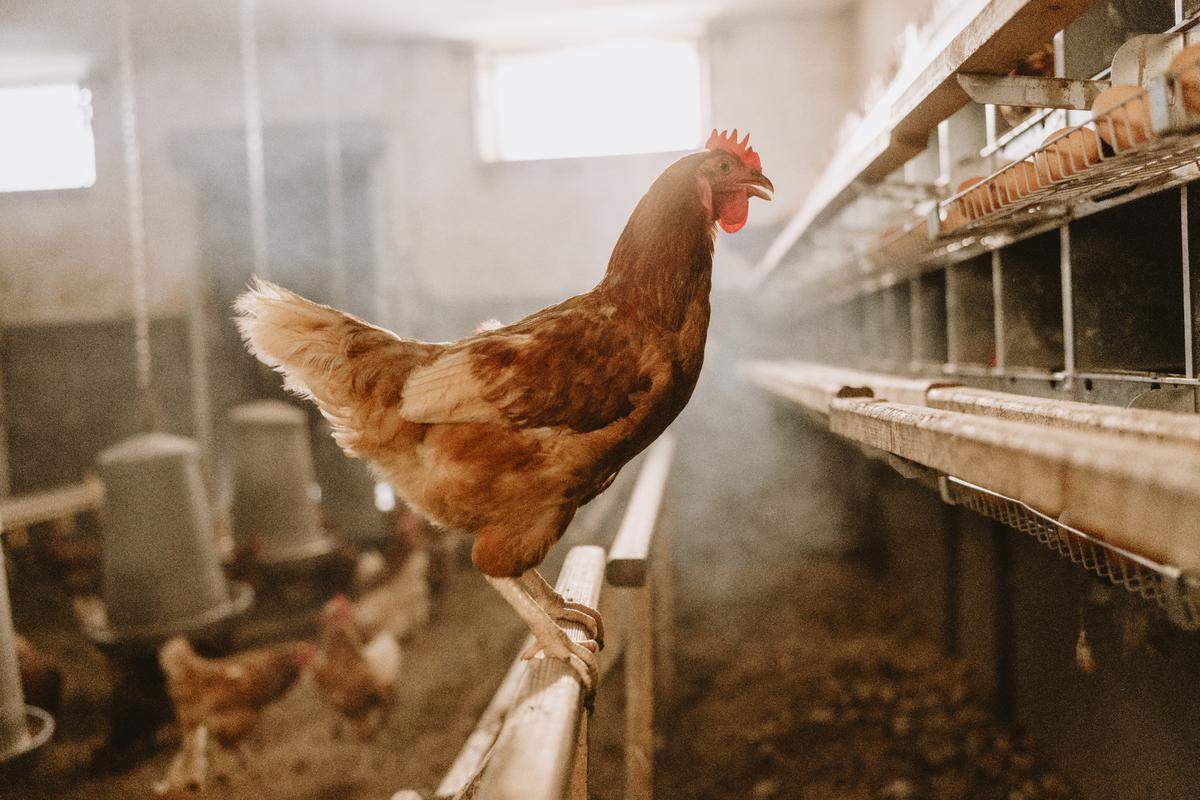
Although the Department of Health has not identified the farm with the avian influenza outbreak other than to say it is in Franklin County, the outbreak follows one in December 2022 at the large Oakdale Farms poultry operation north of Pasco.
The Benton Franklin Health District is confirming preliminary results of worker testing done at the Washington state Public Health Laboratory by sending samples to the Centers for Disease Control and Prevention.
The local health district received reports Friday, Oct. 18, of ill egg farm workers, and the first preliminary results of their tests for the virus came back late Saturday, Krager, said.
The workers had mild upper respiratory illness and conjunctivitis, or red and inflamed eyes, Krager said.
The state Department of Health and the Benton Franklin Health District have provided personal protective equipment to workers on the farm and are providing testing, vaccines and treatment for workers with symptoms. It also is monitoring other workers for symptoms of avian influenza.
Euthanizing infected birds
The infected chicken were in multiple barns in the Pasco area farm, and chickens in all but part of one building had been euthanized by Sunday afternoon thanks to the “very, very, very hard work” of farm workers, said Amber Itle, Washington state veterinarian.
The HPN1 virus is so lethal in chickens that birds were dying before they could be euthanized.
“This is extremely stressful for the workers and the owners,” Itle said.
The carcasses are being composted in piles without being moved from the farm to prevent possible spread of the virus, such as by trucks that are not properly decontaminated, she said.
None of the possibly infected eggs or chicken are entering the food chain, Itle said.
State and federal officials are monitoring flocks for symptoms within about six miles of the infected site. Owners of commercial flocks also are required to closely monitor flocks in that zone and do regular testing.
In the past, outbreaks of avian flu in chicken flocks have left egg shelves close to bare at some grocery stores near production facilities and led to higher prices on eggs elsewhere.
WA health care provider notification
Dr. Tao Sheng Kwan-Gett, Department of Health chief science officer, urged Washington residents, particularly farm workers, and those with bird flocks to get their seasonal influenza vaccination.
Although it will not protect against bird flu, it can help prevent changes to the avian influenza if someone has both avian and seasonal influenza at the same time, he said. The genetic material of the two strains could mix to produce a virus that has the ease of transmission in people of seasonal influenza.
The Washington state Department of Health planned to send a message to health care providers in the state Sunday afternoon advising them to watch for symptoms in patients that could be caused by avian influenza.
Workers at other poultry farms in the greater Tri-Cities area with symptoms such as red eyes or respiratory infections since Oct. 7 should contact the Benton Franklin Health District at 509-460-4550.
Backyard bird flock precautions
Since avian influenza, or H5N1, was first detected in Washington state in 2022 two commercial flocks and 46 domestic flocks have been infected and bird owners are encouraged to use biosecurity measures outlined at poultrybiosecurity.org.
The current strain circulating in Washington state is a poultry strain, not a dairy cow strain, Itle said.
Every backyard flock is at risk, she said. Migrating waterfowl are landing, and many carry the virus but have no symptoms, she said.
“The most important thing you can do if you have backyard poultry is to keep your birds in and away from wild waterfowl,” Itle said, both to protect the flocks and yourself.
There may not be any signs of illness in their birds before a sudden die off of about 40% of the flock, she said.
Since avian influenza, or H5N1, was first detected in Washington state in 2022 two commercial flocks and 45 domestic flocks have been infected and bird owners are encouraged to use biosecurity measures outlined at poultrybiosecurity.org.
Owners of backyard flocks are asked to report sick or lethargic birds or deaths of birds to the state with an online surveillance self-reporting tool. If multiple birds die suddenly, they should call the sick bird hotline at 800-606-3056 to report the birds, which should be double bagged and kept in a cooler on ice until state veterinarians can collect samples.
People who find wild aquatic birds that may be sick or may have died from avian influenza should report them to the Washington state Department of Fish and Wildlife at wdfw.wa.gov/species-habitats/diseases/bird-flu.
Those who are exposed to infected birds, cattle or other animals are at higher risk of infection and should take precautions, such as wearing personal protection equipment, according to the Department of Health.
It also warns people not to handle dead birds and to keep their pets away from them.
Chicken products safe
Chicken, eggs and other poultry products are safe to eat when properly handled and cooked, according to the Benton Franklin Health District.
It recommends:
- Wash hands and clean and sanitize work surfaces and equipment.
- Do not wash poultry.
- Separate raw and cooked meat to avoid cross-contamination.
- Cook poultry thoroughly to an internal temperature of 165 degrees Fahrenheit.
- Keep poultry stored at 40 F or below or, in the freezer at 0 F or below.
This story was originally published October 20, 2024 at 1:27 PM.