‘A perfect storm.’ Rain pounds WA hay growers. What it means for beef and milk prices
It’s been an especially rough few years for farmers and growers trying to recover from the pandemic, between supply chain issues, record heat last year and abnormally late freezing temperatures this spring.
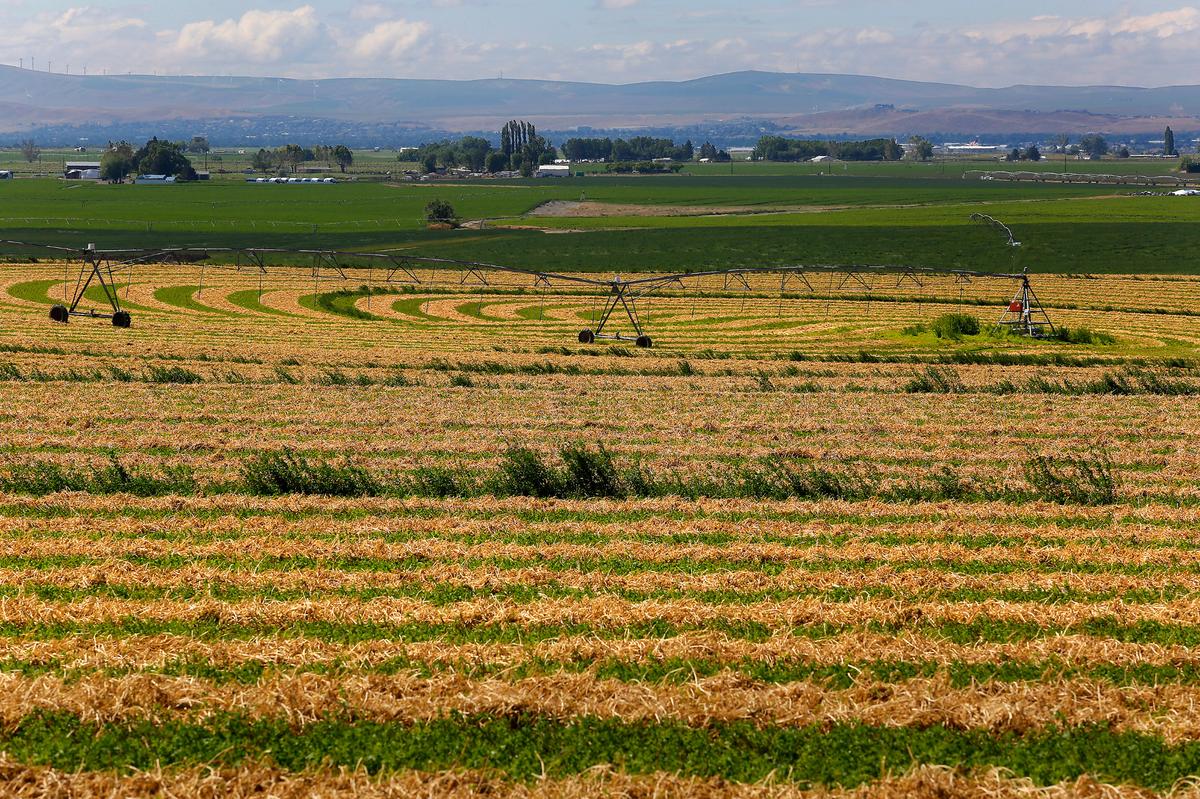
For many hay growers around the Mid-Columbia, it looked like they were finally going to see some smooth sailing as they began their first cutting this month, then all of their cut alfalfa got soaked laying in the fields.
Now that product isn’t suitable to be exported.
Growers will have to sell all of it domestically, and at a lower price because the rain degraded the quality of the crop.
It shouldn’t be hard to find buyers, but it’s just another disruption for farmers in a string of bad luck.
Hay production is big business in Washington, accounting for about $600 million in sales in 2020, and its prices have impact all the way down the food chain, possibly raising beef and dairy prices.
Hay prices vary by crop and quality. Alfalfa and Timothy are the most common in Washington.
The most recent data from the U.S. Department of Agriculture for Columbia Basin hay, show the loss in quality could cost farmers $55 per ton.
Supreme quality hay costs about $365 a ton and rain damaged, but good quality alfalfa is closer to $310.
Soggy hay
That snapshot was before the heavy rain last weekend, which could drive prices down even more with a region’s worth of cut hay now rain soaked.
Exporter Scot Courtright told the Herald that he estimates about 90% of the hay cut this past week will not be in exportable shape.
“The single biggest issue is our delayed harvest. Volume is down on the export side because we should be shipping new crop now, or we should be awfully close, but we’re still another two weeks away from shipping new crops of each,” Courtright said.
“The volume of alfalfa from Washington is also significantly lower this year than last year. There’s just too much moisture,” he said.
Courtright said that on the positive side, the domestic demand for hay means even lower quality hay will still be profitable for growers.
Andrew Eddie, operations manager at RNH Farms, said that the late cold snap this year means that farmers are cutting hay almost a month later than they typically would.
“The weather has been very strange, it’s not often that a wide majority of growers are trying to put off first cutting to the middle of June,” he said.
“Typically, the second week to end of May, hay has been put in a bale and it’s pretty dry. There’s a lot of wet hay that’s being produced right now, just for the sake of trying to get it off the ground.”
Eddie said that because hay is already in short supply, it’s hard to assess how much the bad weather could impact beef and dairy prices.
While the addition of any hay that was set to be exported could help U.S. cattle and dairy farmers offset some expenses on more costly feed alternatives, the market is likely to be flooded with less nutritious, rain-damaged hay. When lower quality hay is used for feed, it typically means cattle ranchers and dairies spend more to supplement nutritional needs.
“Dairies are getting full of wet hay, they’re not expecting too much,” Eddie said. “Dry hay is going to be hard to come by.”
Eddie said overall tonnage of hay should still meet forecasts, as long as farmers can extend out their cutting windows. Still he anticipates many will cut three times this year instead of four.
Shipping costs, delays
Once growers are able to begin exporting, they’ll be facing another set of hurdles.
Courtright said that shipping issues have eased up some as recession fears have slowed buying, but the peak import season is coming up.
A bipartisan ocean shipping reform bill that recently passed is headed to President Joe Biden for signing. That bill aims to crack down on bad behavior by shipping companies, lower costs for exporters with products lingering on docks and provide more funding to keep ports moving.
Courtright said that while he’s optimistic shipping issues are improving, he is concerned about the possibility of a longshoreman strike at major U.S. ports. as the union attempts to renegotiate contracts.
He said it’s a six-year cycle, and if past negotiation trends hold, a work stoppage could be likely.
“There is a possibility of that contract not being renewed and some kind of terminal disruption because of that,” Courtright said. “Since 2002 there hasn’t been a contract renewal that has not resulted in a disruption of some kind.”
Eddie said right now growers are just hoping the weather straightens out, and they can get back on track.
He said that all of these factors come together for a perfect storm of issues that could see consumer prices rise. If farmers are paying more for fuel to cut and have hay delivered, that cost will likely be passed on to dairies and cattle ranchers, who will in turn pass it on to consumers. Because hay is such a staple, that means prices impacted could include everything from beef to dairy such as milk and cheese and even whey products and baby formula.
“All production costs have gone up this year, so keep that in mind. We’re not just trying to raise the price,” he said.
“Farmers should budget out where you need to be, see what you can afford and go from there. That’s what growers are going to have to do as well.”