
Faith | Volunteers help WA state prison inmates find a ‘second chance’
Wil Marroquin can easily recall how he felt nearly 50 years ago as he entered the Washington State Penitentiary for the first time and heard the doors slam and lock behind him.
“I had never been around a prison or in prison at all,” he said. “I was scared as I could be.”
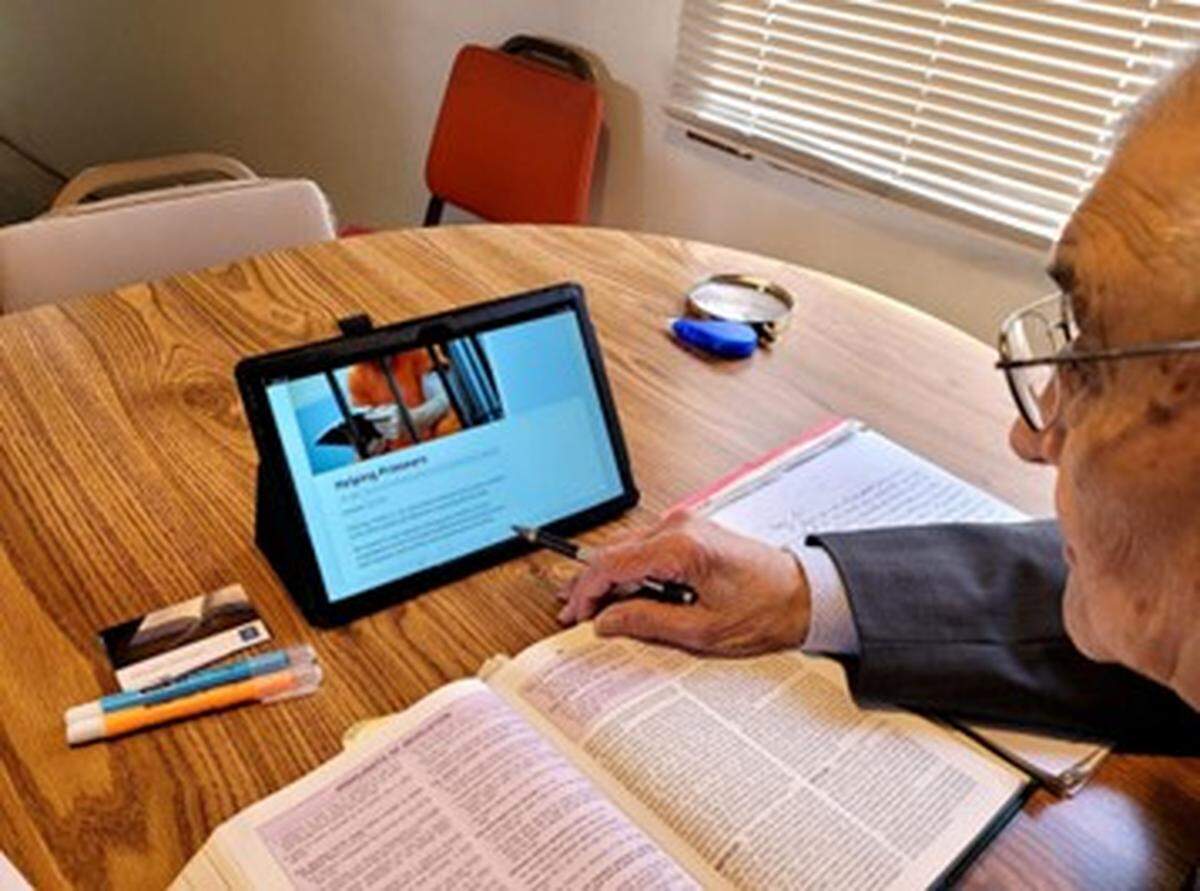
Now 96, this Walla Walla resident is one of thousands of Jehovah’s Witnesses who volunteer in a prison ministry that has ramped up during the pandemic.
New methods were tested with the hope of reaching some 2.1 million incarcerated individuals in the United States with comfort and hope from the Bible amid lockdowns at these facilities.
“In our prison ministry initiatives, we’ve observed that many inmates want to change,” said Robert Hendriks, U.S. spokesperson for Jehovah’s Witnesses. “They’re looking for a second chance, and some are finding the strength to change by applying Bible principles.”
More than 600,000 individuals exit state and federal prisons each year and face what can be an “overwhelming” transition back into society, according to a proclamation from the White House.
“The reentry process is complicated in the best of times, and is even more so with the additional difficulties presented by the COVID-19 pandemic.”
Marroquin, who has volunteered in the minimum, medium, and close security units of WSP, knows that inmates who want to change their lifestyle face many obstacles both inside and outside of prison.
“It’s not easy to study with individuals, even if they want to,” he admitted.
Still, he volunteers in the prison ministry almost every day of the week. Marroquin believes in second chances.
Bible education is offered to inmates that focuses on principles that have helped others to make real changes in their lives. As a result, many have been able to overcome deeply ingrained habits.
When inmates apply the principles they learn from their study of the Bible, the positive transformation they make can be striking. Marroquin recalled one inmate, who had already begun to change his conduct, eventually also cut his long hair and cleaned up his appearance.
“I did not even recognize him,” Marroquin said. “He had completely changed.”
Many of those Marroquin has helped are now offering that same help to others.
“Some have also volunteered after they got out of prison to go back in there to go and start helping others in the prison,” Marroquin said. “They use their second chance by helping others in the institution.”
Fellow Witnesses who have been doing a similar work in jails, prisons, state hospitals, youth facilities and substance-abuse facilities for decades are eager to return in person when safe to do so, said Hendriks.
“Meanwhile,” he said, “rather than slow down our outreach, we are using this time to improve the training of our volunteers and research innovative ways to expand the work.”
In 2021 alone, more than 6,300 of these volunteers received enhanced training to assist individuals at 920 prison facilities across the country.
Marroquin’s reports of life transformations are not isolated.
Darrell Boyce of Louisville, Ken., also entered prison at 23 on drug charges. He studied the Bible during his incarceration, was baptized upon his release, and returned to help other inmates spiritually.
At one point, he was even overseeing the prison ministry work at the Pitchess Detention Center in Los Angeles, where he went six days a week to study the Bible with those who requested assistance.
“I felt like I had wasted the first 25 years of my life,” he said. “But I was able to use those years in some positive way to help others, which felt good.”
Reflecting on the 60 individuals he has personally assisted, Marroquin said, “The changes that they make, it’s unreal.” He added that many are happy they made changes while in prison. Now, he said, “they look forward to a real future.”
The Witnesses’ official website, jw.org, has more information about their prison ministry efforts during the pandemic as well as personal experiences of Bible instructors and learners in prison.
“It is our love for God and for neighbor that moves us to continue to reach out to inmates,” said Hendriks. “We know the God of the Bible believes in second chances.”