
Scientist ponders God’s grace and mankind’s survival
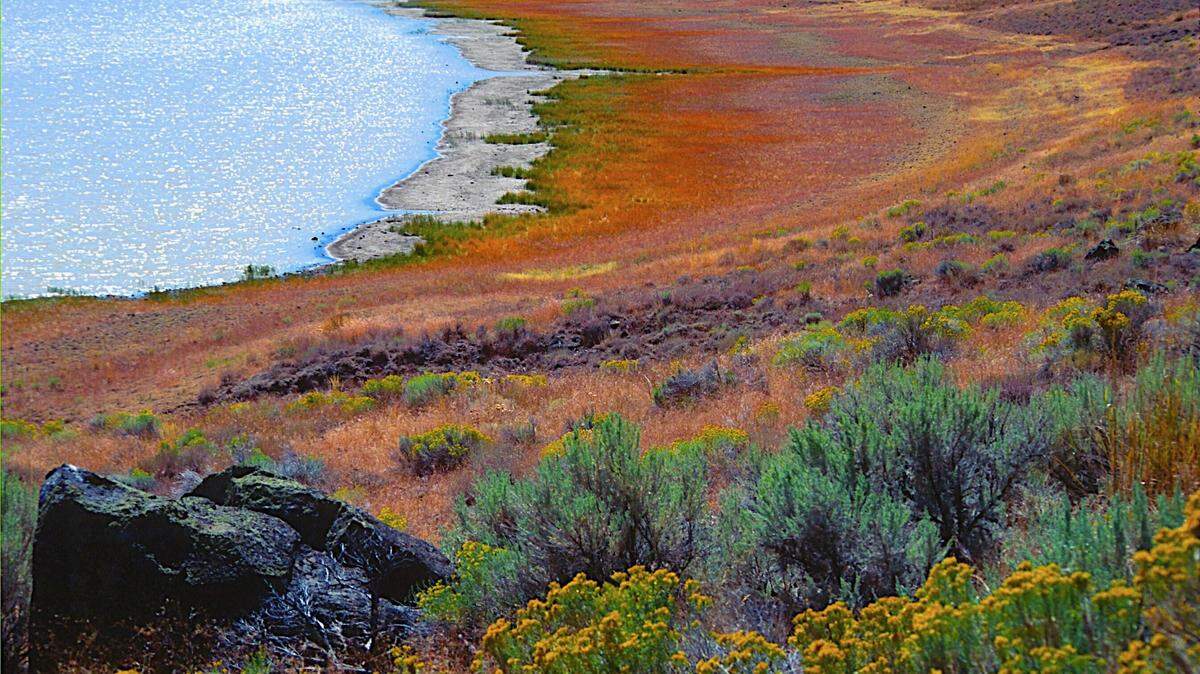
“The hand of the Lord was on me, and he brought me out by the Spirit of the Lord and set me in the middle of a valley; it was full of bones. He led me back and forth among them, and I saw a great many bones on the floor of the valley, bones that were very dry.” (Ezekiel 37:1-14)
In Ezekiel there was a valley full of human dry bones. Before the prophet the bones connect into human figures, then the bones become covered with tendon, tissues, flesh and skin.
The 2019 blizzard in our area where over a thousand dairy cows froze to death reminded me of a valley of dry bones I discovered some years ago in the eastern Oregon desert.
A low basalt rim stretched from east to west across the sage steppe. At the foot of the rim a windrow of dry sheep bones stretched for over a mile. The sheep had been trapped in a blizzard and huddled at the foot of the rim where they all froze to death. Unlike Ezekiel, the sheep bones are not going to reform and become covered with tendons, flesh and skin.
The valley of dry sheep bones reminded me of a fundamental principle of nature—nature is sometimes terrifying. Nature shows little regard for individuals or even species. Over ninety percent of species that have ever existed have become extinct. Yet nature also creates a plethora of beautiful, unique and intriguing individual creatures and species.
It seems that God likes things that can create themselves, but does not intervene in helping them survive even though some species have been around for millions of years.
As a scientist and a poet, I have struggled to understand this principle for many years. The various mechanisms of evolutionary science have helped my understanding, but there is still a paradox.
The poet, Rilke, expresses this paradox well when he states that, “For beauty is nothing but the beginning of terror which we are barely able to endure, and it amazes us so, because it serenely disdains to destroy us.”
The paradox of beauty and terror that surrounds us in so many ways is in the final analysis a mystery. But I have come to believe that this paradox is the ultimate manifestation of God’s grace that he founded a universe that does not annihilate us.