
Freedom after Holocaust is godsend
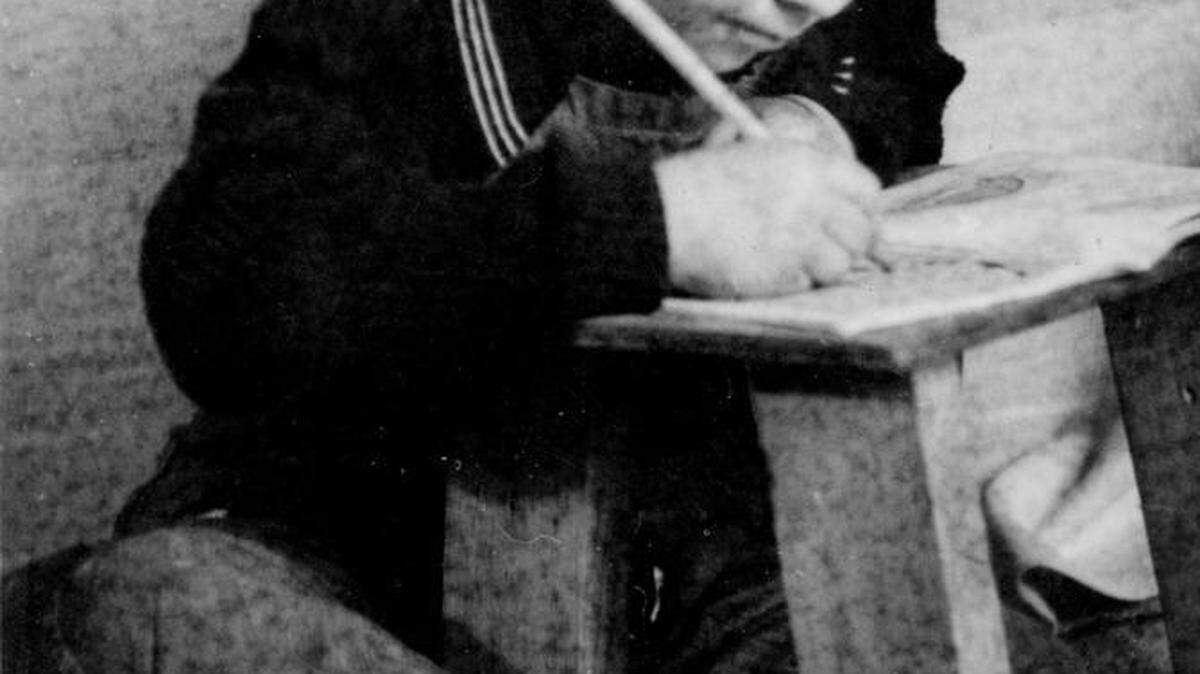
Freedom. Not one single day. Instead, endless hours of terror and deprivation in a Nazi concentration camp, the birthplace for one Ukraine Jew.
“My father — his name is Andrew — has only a few memories up until age 5,” Adam Hrebeniuk of Kennewick said as he thought back on his family’s history during World War II. “He remembers standing in the work camp area and looking through the wires at a kid his age in the death camp, being carted off to the gas chambers.”
It was the only life the little boy had ever known — a child born in the German Nazi labor camp.
In 1941, the Nazis invaded Kiev where his mother — like thousands upon thousands of other Jews — was herded with her four children into an open railroad car, the husband and father sent elsewhere.
“She was sick, standing for days in the train,” Adam said about the agonizing winter ride, one that evoked a desperate cry for help in the packed car, foul with death. “My grandmother called out to God, ‘I’m going to die if I don’t have a covering.’ And all of a sudden, a tarp from two cars ahead flew off and landed perfectly on theirs — and it stayed there,” the first of what she believed was divine intervention.
But to what end had Andrew’s mother and children been saved? Adolf Hitler was set on conquering all of Russia and annihilating the Jews, there and in all of Europe. By war’s end, millions of Jewish men, women and children — whole communities — would be extinguished; newborn infants killed.
The future seemed bleak, and yet the mother held onto her faith. Unknown to the young woman, her husband would find unexpected favor.
“My grandfather (Andrew’s father) used to draw the backdrops for the Bolshoi ballet in Kiev,” Adam said about the talent that attracted German officers who wanted their portraits painted. “He told them, ‘If I’m going to do art for you, don’t kill my child when he is born,’ ” adding that he also wanted his family housed together in their labor camp, the adjacent killing camp their tragic view.
Already an older sister had been executed as a toddler, but Andrew was spared upon birth in the Parshen, Germany, labor camp, the smell and threat of death hanging in the air. The war years dragged on. The child grew despite harsh conditions. Then one day, word came that the war was over. The Americans were coming. Still, cruelty had time to taunt the 5-year-old Jew.
“He had managed to find an apple,” Adam said about the scene unfolding, a vivid memory for young Andrew. “A German officer walked up to him, ‘You’re the lucky one eating an apple. Let’s see if it’s really your lucky day,’ and then proceeded to play Russian roulette with the apple on his head. The bullet didn’t fire and he got to eat his apple.”
Spared once more.
Finally, the vicious wire gates opened. Freedom lay just beyond the expansive field. The U.S. military waited on the edge of the forest, ready to welcome the concentration camps’ victims stumbling toward them. But in the prisoners’ panic to get away, the Nazis shot as they ran toward liberty. The Americans returned fire from the other side.
“My grandma (Andrew’s mother) remembers running across with their children and all the shooting around her. I don’t understand how they weren’t hit,” Adam said, retelling the horrific scene as survivors were struck down in flight. “They got to a location where you weren’t supposed to cross, a zone of some kind. She looked into an American officer’s eyes and said a silent prayer, ‘God I need to get into the forest and get to the other side!’ ”
Life hung in the balance.
Suddenly, disregarding the rules, the soldier reached across the divide and pulled the family to safety, his commanding officer swearing at his disobedience. Onward the tiny band fled to a checkpoint where they and other refugees were setup in makeshift shelters.
“My dad’s first happy memory is being in a tent in the American camp and a photographer snapping pictures while kids were writing,” Adam said, reflecting on how Andrew had never held a pencil or had any kind of paper.
Weeks passed in the refugee camp until one day their new “normal” changed. Refugees were going to be moved.
“An American soldier told my grandfather to get into a line,’ ” Adam said how Andrew’s dad worried about being separated from his family. “He asked, ‘Can my kids come?’ but the soldier didn’t speak the foreign language.”
Providence once again intervened.
Some refugees were chosen for a different line and sent back to the Soviet Union where they were seen as traitors to the communist government, many executed. But young Andrew’s family was able to stay together and placed on a waiting ship — one headed to Ellis Island and freedom.
In the years ahead, the little boy, Andrew, who once only knew limits, found success and freedom in America as a man — a freedom he wanted his young son, Adam, to recognize.
“He’d bend down on one knee,” said Adam as he remembered his father’s words — a man who was a daily example of trust in Christ, a faith he found just before Adam was born. “And he’d say, ‘You can be whatever you want to be. Don’t waste your freedom.’ ”
That son didn’t. Today, Adam Hrebeniuk is a church pastor leading others to a different kind of freedom through faith — very possibly an answer to a grandmother’s long ago prayer.
This story was originally published July 4, 2015 at 12:00 AM with the headline "Freedom after Holocaust is godsend."