
WHO says Ebola response catching up as confirmed DRC cases hit 344
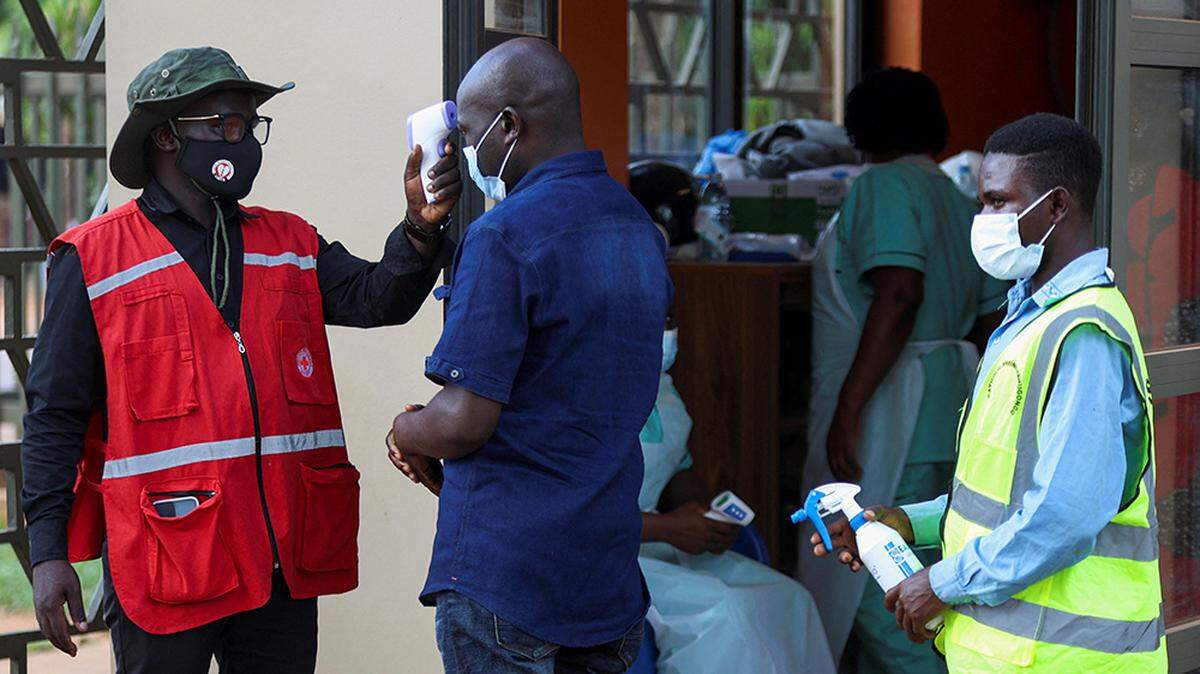
The World Health Organization said on Wednesday that the world is “catching up” with the Ebola outbreak in the Democratic Republic of Congo, where there have been 344 confirmed cases of the disease and 60 confirmed deaths, although challenges remain.
“The outbreak had a big head start, and we’re still behind, but under the leadership of the government of DRC, we’re catching up,” WHO Director-General Tedros Adhanom Ghebreyesus said during a press briefing.
The outbreak, linked to the Bundibugyo strain of the virus, has spread to neighboring Uganda, where 15 cases have been confirmed, including one death, the agency said.
Access to testing has also improved, which is why hundreds of cases that were initially suspected of being Ebola have now been ruled out, the WHO said. The most common tests used for Ebola do not detect the Bundibugyo strain causing this outbreak, which has caused a backlog.
“What the field team is doing, is looking to clear the backlog. So the lab so far has done 1,445 tests that cleared almost all the backlog we had, and every day as the surveillance improves, there are new suspect cases,” said Abdirahman Mahamud, WHO director of health emergency alert and response operations.
There are 116 suspected cases awaiting testing, he said. He said a team is also working through the 220 suspected deaths to ascertain the likelihood of the deaths being caused by Ebola.
Six people have recovered in the DRC and two in Uganda, showing that Ebola patients can survive if they have access to care and seek treatment as soon as symptoms appear, the agency said.
The outbreak response continues to face challenges in scaling up testing capacity and tracing contacts, while blanket travel restrictions imposed by some countries are disrupting supply chains and hampering efforts, the agency said.
Only about 45% of contacts have been followed up, and to stay ahead of the outbreak, that figure needs to rise above 90%, Tedros said.
Tedros also said the outbreak may have started as early as January, and teams were still investigating that, but stressed that the focus now should be on trying to contain it.
That will cost WHO at least $115 million over the next three months, of which around 35% is currently raised, the agency’s emergencies head Chikwe Ihekweazu said, adding that “a lot more” would be required in funding for the duration of the response.
A wider plan and fundraising will be launched with other partners, including the Africa Centers for Disease Control and Prevention and the Congo and Uganda governments, on Friday, he said.
In related news, Kenya will continue work on an isolation and treatment unit at an airbase in the East African nation that can be used to house U.S. servicemen exposed to the Ebola virus, its health secretary said.
“We will not stop it,” Aden Duale told lawmakers in the capital, Nairobi, on Wednesday. “Let’s not politicize the health of our citizens.”
The announcement that construction will proceed was made despite a court having directed the authorities to freeze the deal with the U.S. and disclose details of the agreement they signed.
The center being built in central Kenya is one of 23 that the government is readying should the DRC outbreak spread across its eastern borders, Duale said.
Kenya’s position as East Africa’s aviation, trade, transport and diplomatic hub places it at increased risk that the disease could be imported, Duale said. He called for an emergency allocation of $20 million to be made available to strengthen the nation’s readiness to tackle the first 100 cases.
While Kenya has adequate laboratory capacity, it has insufficient stocks of specialized test kits, reagents and personal protective equipment, the health secretary said. The World Health Organization has provided the country with 1,000 Ebola PPE kits, he added.
Kenya has an eight-bed isolation and treatment unit at its biggest medical facility and another 49 beds at the National Police Service Hospital, while county-level hospitals are expected to make additional bed capacity available.
“All such facilities are established for the protection of the people of Kenya and all persons within Kenya’s borders,” Duale said.
Bloomberg News contributed to this report.
Copyright Reuters or USA Today Network via Reuters Connect
This story was originally published June 3, 2026 at 10:55 AM.