
You’re taxed too much for Tri-City bus services, says conservative group
Ben Franklin Transit collects too much in sales taxes considering fewer and fewer Tri-Citians are riding public buses, according to a conservative research group
“Give the hardworking families here in the Tri-Cities a break,” Chris Cargill, director of the Eastern Washington office of the Washington Policy Center, said on Tuesday.
The center, a conservative research group with a Tri-City office, is questioning whether the sales tax rate of 6 cents on every $10 spent is overfunding the transit agency.
Sixteen years ago voters approved doubling the sales tax rate collected.
The Washington Policy Center’s latest of three studies looking at the bus service found that ridership is down 40 percent between 2009 and 2017, despite population growth in the Tri-Cities area of 15 percent.
Ben Franklin Transit did not see the Washington Policy Center’s latest study on the agency until Tuesday afternoon.
“As we have in the past, we will review and interpret the data presented in this latest report and thoughtfully respond as appropriate,” the agency said in a statement.
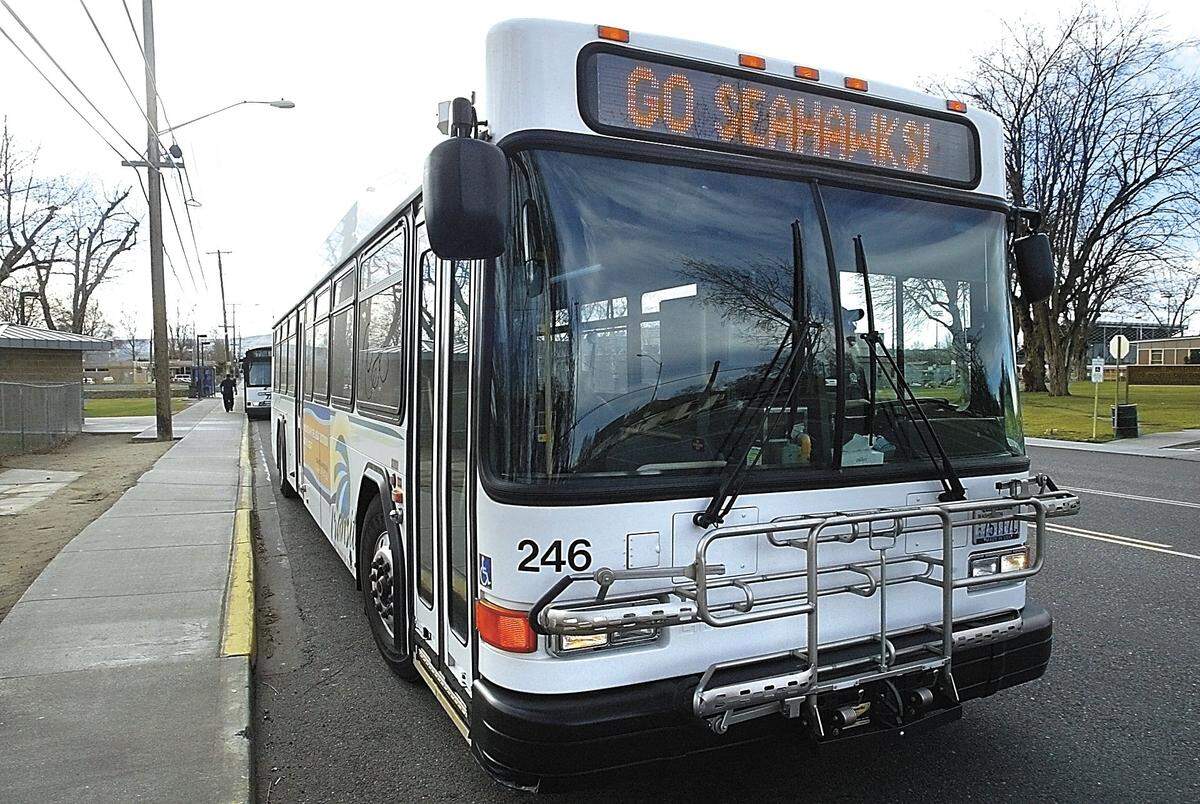
To get rising costs under control, the policy center suggests dropping some bus routes and contracting out more of its specialized services to cut costs.
The transit offers Dial-A-Ride , night and Sunday service door-to-door, and a taxi feeder service to help rural customers reach a bus stop. Now it contracts out its taxi feeder service to a private cab company.
“What we are advising is Ben Franklin Transit right-size the agency to the community need,” said Mariya Frost, policy analyst for the center’s Coles Center for Transportation. “Reduce the tax burden and use the money it has to provide quality, safe, clean transit service for those people who depend on it.”
From 2009 to 2017, the sales tax collected for Ben Franklin Transit has jumped by about 43 percent and operating expenses have climbed by 20 percent, the study found.
The cost to provide a bus ride to one person was at $5.61 in 2016, up from $3.48 in 2009, an increase of about 61 percent, the study found.
The increase in sales tax collection is driven by improvements in the local economy, increases in construction costs and auto sales, according to financial reports of the transit agency cited by the study.
Not only is ridership down on buses, it’s down 23 percent for special services like Dial-A-Ride for elderly and disabled riders and down 49 percent for van pool riders, in part because of the completion of chemical weapons destruction at the Umatilla Chemical Depot in Oregon.
The transit agency has responded to the drop in bus customers by introducing free Wi-Fi and adding new routes and extended hours, the study said.
The changes have improved the experience of customers, but “agency leaders should ask whether increasing spending while ridership continues to free fall is the best way to spend public dollars,” the report said.
Transit service customers are down nationwide since 2017, center officials said. But it said the Ben Franklin Transit decline was steeper.
The center looked at data for the first six months of 2018, finding that ridership locally dropped 6 percent from the same period in 2017, while nationally ridership declined at about half that rate, according to information from the National Transit Database.
The center attributed part of the decline to the growing use of ride-sharing services like Uber and Lyft.
Transit officials said in 2002 the increased sales rate was needed because of the loss of the state’s motor vehicle excise tax.
Without the increase in the sales tax rate, the agency said it would have needed to cut Dial-A-Ride by 10 percent and regular bus service would have been cut in half — with no Saturday services, no special events service and routes eliminated or cut to hourly.
The sales tax rate increase for the transit was approved by nearly 56 percent of voters, despite a vigorous “no new taxes” campaign.
This story was originally published September 25, 2018 at 6:33 PM.