
Seattle’s smoky air headed to Tri-Cities
Air quality in the Tri-Cities was rated just barely below the “unhealthy” level Wednesday by the Washington state Department of Ecology.
At 1 p.m. it put the Tri-Cities on its numerical scale at 149, which is rated at “unhealthy for sensitive groups.” One point higher and it would be considered unhealthy for everyone.
By the end of the week, substantial clearing of the air is possible as the winds shift from the north to the west.
But Thursday there could be some additional smoke blown into the Tri-Cities, before air quality improves, according to the Washington state Department of Ecology, posting on the Washington Smoke blog.
Westerly winds are expected to push smoke east across the state, carrying smoke that’s now fouling the air quality along the Interstate 5 corridor in Washington state into Eastern Washington.
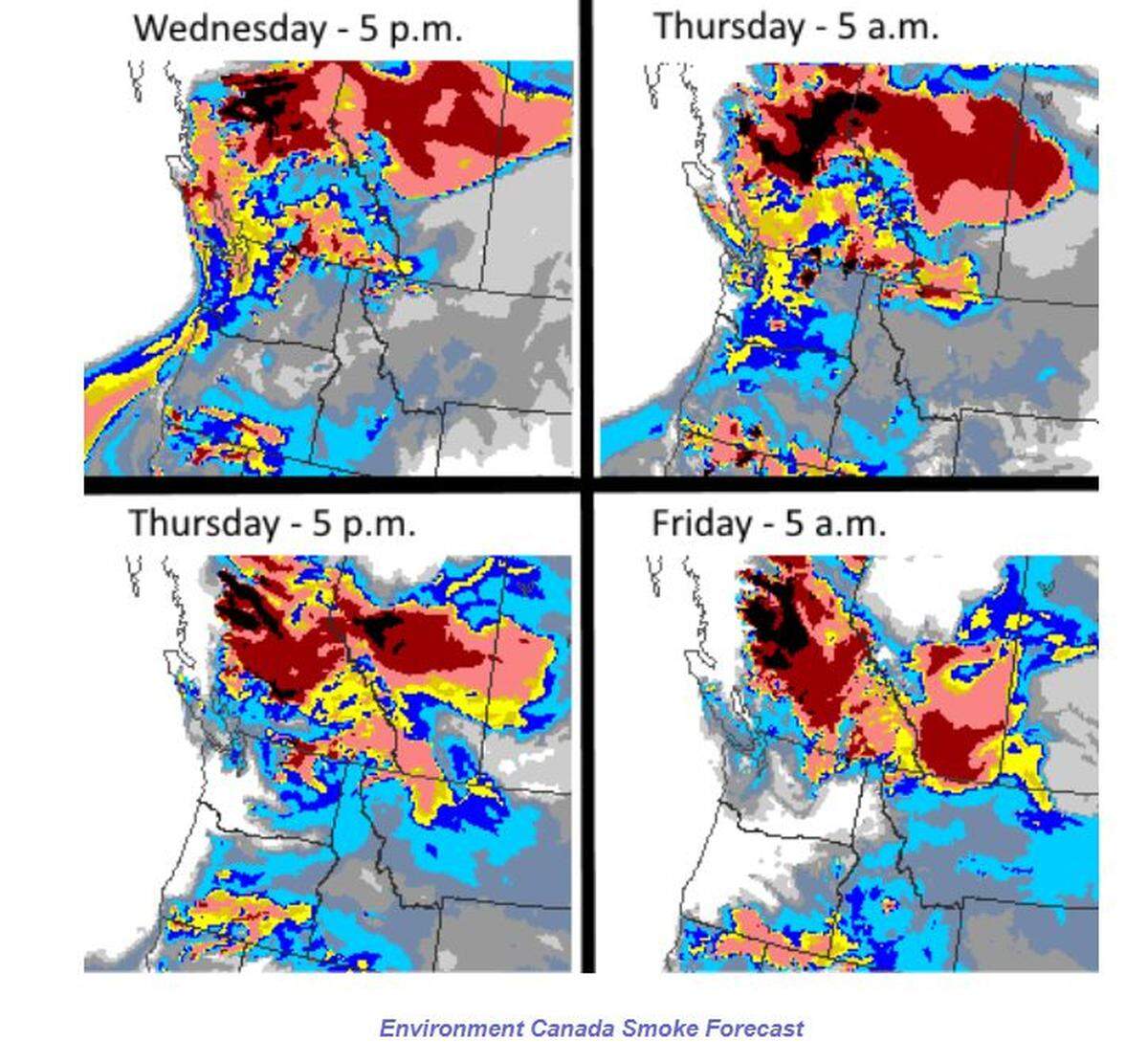
Wednesday southeast Washington, including the Tri-Cities, had some of the best air quality in a state still covered with a smoky haze. Parts of the Seattle area had air quality rated as “very unhealthy.”
Gusts as high as 18 mph are forecast for the Tri-Cities on Thursday by the National Weather Service.
Environment Canada predicts that the wind should push most of the surge of smoke over the Tri-Cities and then farther east by early Friday morning.
Now much of the smoke in the Tri-Cities is being carried by northerly winds from fires in British Columbia, Canada, and northern Washington.
On Wednesday people sensitive to smoke were advised to limit time outdoors. That includes infants, children, pregnant women and elderly people.
Those with chronic health conditions, such as heart and lung disease or diabetes, also should limit time outdoors.
This story was originally published August 22, 2018 at 12:38 PM.