
Mr. Movie | The Power of the Dog’s powerful acting drives a powerful story
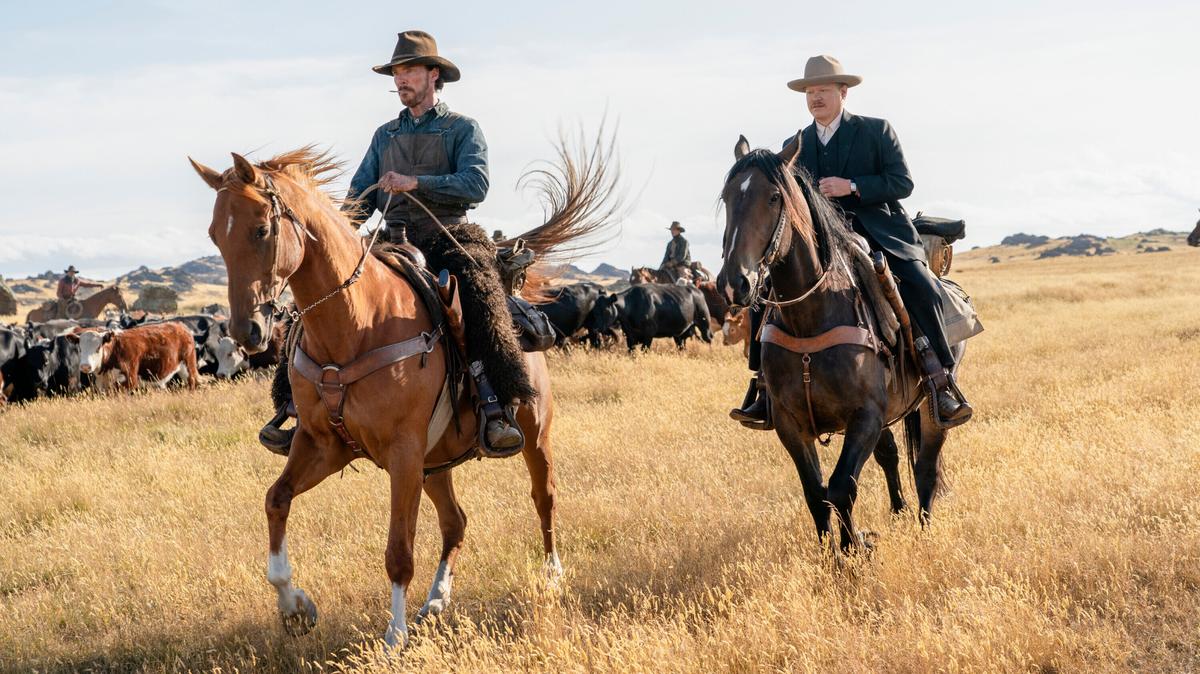
“The Power of the Dog” is written and directed by Jane Campion. It is based on Tom Savage’s 1967 novel and is a chilly concept packed with dark moods and four great performances.
Set on a cattle ranch in Montana in 1925, Campion casts Benedict Cumberbatch and Jesse Plemons as Phil and George Burbank. Phil is overly aggressive and constantly weight-shames George who is a mild-mannered milquetoast.
Both were taught the art of Big Sky Country ranching by their late mentor, Bronco Henry.
Phil idolizes the man. George gives all references to Henry a positive nod but doesn’t seem to really care much about Bronco Henry, and since Phil seems to do all the work, about ranching either.
What he does care about is Rose.
Kirsten Dunst is Rose and Kodi Smit-McPhee plays her son, Peter.
George and the lady marry, and — to Phil’s chagrin — they move to the ranch. That leads to mega-orneriness from Phil as he targets both of them. It and other pressures lead her to drink too much. The boy doesn’t much notice, or care.
Then the expected unexpected happens.
Cumberbatch is an exceptional actor who picked up an Oscar-nod for “The Imitation Game” in 2015 and a Primetime Emmy for doing Sherlock Holmes in 2014. Talk is already circulating about him picking up one here, too.
Most of you — however — know Cumberbatch best as the Marvel Universe’s, Dr. Strange.
Cumberbatch plays Phil as macho on steroids. Underneath, however, there are cracks.
He’s secure on the surface but a mess under all that machoism. Phil is a bad guy, or is he?
Campion’s script deliberately makes you wonder what other kinds of things Bronco Henry taught him about being a cowboy.
McPhee (Nightcrawler in the “X-Men” series) is 6’2”, rail-thin, weighs next to nothing and doesn’t look like he has a prayer against all that testosterone. As the story moves forward you begin to wonder exactly who is dominating who.
Credit for that goes to a quiet, focused and very strong performance from McPhee. Think nominations here, too.
Dunst plays Rose like the proverbial deer in the headlights, and Plemons’ George is completely, but deliberately, checked out.
Campion’s claim to fame is 1994’s, “The Piano.” She followed that effort with the critically acclaimed, “The Portrait of a Lady.” Campion hasn’t done a lot since “Portrait” that mainstream moviegoers would have noticed.
Where “The Power of the Dog” unravels is in her, huh, did I miss something, head-scratching climax. You didn’t but it’s one of those endings where — just to make sure — you wish you could rewind and watch it again.
Don’t. You really didn’t miss anything. It just ends that way.
It’s not how you might end a story, nor how I would, but it’s how Campion does.
And it doesn’t matter, “The Power of the Dog” is a beautifully done movie. As with her other movies, the discomfort comes from the choice of subject matter. “The Power of the Dog” looks at topics most of us would rather not explore.
Also to give Campion credit, her characters have multiple dimensions, and like you and me, and most people, they have complex personalities.
That’s the case here. Phil, George, Rose and Peter all struggle with issues many of us have seen in our families and friends, or even in our own lives.
It’s a powerful story featuring powerful acting. That — and the spectacular back country of New Zealand that substitutes for Montana — offsets the flaws in Campion’s film.
Rated R for mature themes, language and some violence. It’s streaming on Netflix.
Rating: 4 out of 5
This story was originally published November 19, 2021 at 5:00 AM with the headline "Mr. Movie | The Power of the Dog’s powerful acting drives a powerful story."