
‘Understand what we go through.” Hanford High grad’s new music video aims for change
Nobi has been writing music since he was in second grade. Growing up in the Tri-Cities, music flowed through every bit of his life.
The Hanford High graduate’s dad raps — the duo produced an album together. His mom and stepdad are jazz musicians. His siblings also rap.
“Music is kind of one of those things. It’s like breathing. It’s always been there for me,” he said.
Music has also served as a catharsis, letting Nobi process deep feelings and pain. That’s something he felt after first performing his most recent track, “New Chains.”
Nobi began writing “New Chains” around the time of Trayvon Martin’s murder.
“I was feeling super heavy about that,” he said.
About the same time, Nobi, whose given name is Marquise Green, was reading “Black Like Me” by John Howard Griffin. He was also listening to Kanye West’s track “New Slaves,” which delves into how modern consumerism and the private prison system are forms of oppression.
Nobi wanted to further break that down in his new song.
“Old slavery was whips and chains, and now we’ve traded that for cars and jewelry and all of these things that people will buy outside of their price range. When we’re doing that, that’s another form of oppression,” Nobi said.
With the privatized prison system, “There’s basically a pipeline that’s creating this workforce for all of these super, super rich people. And the workforce is working for nothing because they’re in jail,” Nobi said.
Emotional filming
The powerful new video for “New Chains,” directed by Tri-City native Justin Frick, is shot mostly in black and white. It opens on a smattering of diamonds, pouring from the camera lens. Nobi, in overalls, hacks away at a rock.
“Try to tell us that we ain’t ancestors. Treat a protest like a transgression,” Nobi raps.
Nobi and Frick filmed the entire video at Rainier Avenue Radio in Seattle, an all black-owned radio station. In one scene filmed outside, Nobi is running from the police, holding fists full of jewelry and cash.
“I just remember feeling like this could really happen,” he said. “I felt pretty emotional filming that scene.”
In another dramatic moment in the video, Nobi hangs from a gallow, a noose tight around his neck, fire at his feet.
“They say the hangman left, huh? Why we hanging ourselves? New age, old debts. No change. New slaves. New chains on our necks,” Nobi raps in the video.
Nobi said just seeing the gallows for the first time made him think.
“I started thinking about all the people that, that was their end,” he said.
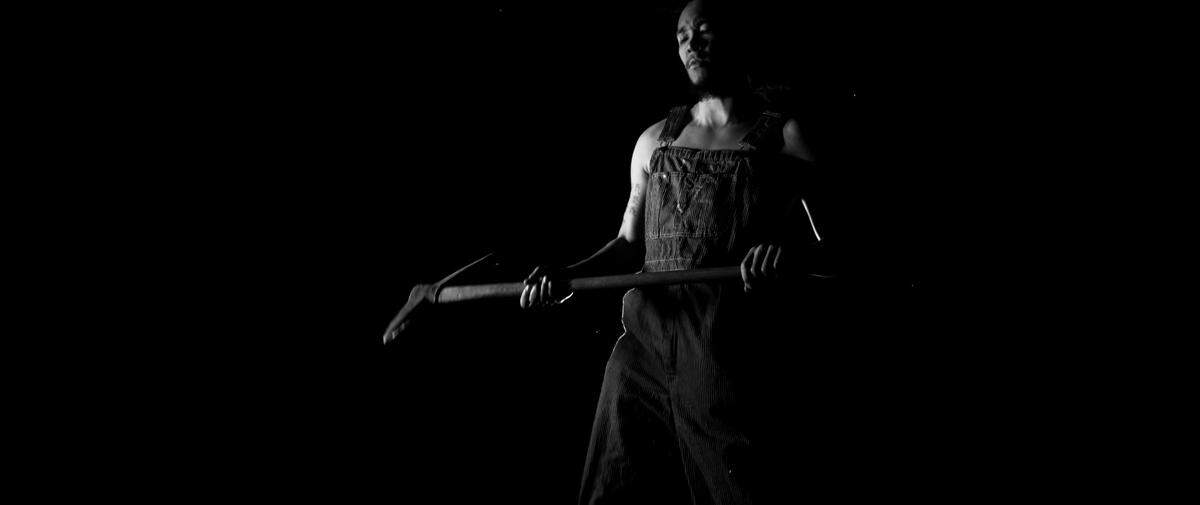
Nobi and Frick have been friends for years. Nobi said they both felt raw after filming the scene.
Provoking change
Frick said the challenge of the video was to be sensitive while still trying to get a point across.
“That was definitely a bigger video to try to step up to the plate and create visuals based on the lyrics and try to tell a story throughout that,” Frick said.
At the end, the video quickly cuts from black and white to color. Nobi raps about wanting unaffordable material goods, as people robotically rush around him at parties and photo shoots.
“I just wanna be rich. I just want the clothes. I just want the money. I just want all these whips. I just want all this ice, and I just want all these chains. I just want these Nikes, and I can’t keep my change,” Nobi raps.
Nobi stares at the camera, a puppet to the system, Frick said.
The visuals show that “If you keep at hitting your rock to find your own diamond, it’s more worth it. Rather than selling out and being a drone or a puppet to the system later,” Frick said.
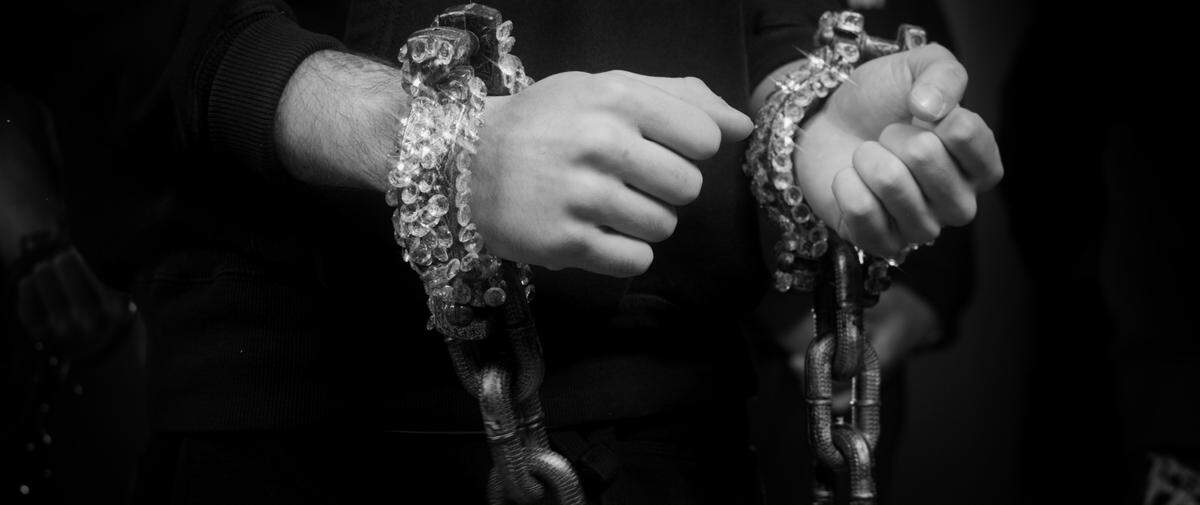
Nobi said the video looks as important as the song felt when he wrote it.
His entire conceptual album will drop on streaming services on Juneteenth, which commemorates the day in 1865 when soldiers landed in Galveston, Texas, with the news that people who were enslaved were free — more than two years after the Emancipation Proclamation.
“The album is not only (about) part of my journey through America this far, but my friends and family members and ancestors — so many people who have shared stories with me,” Nobi said. “I’m hoping with the release of it, people are able to listen to it and understand what we go through every day.”
Nobi said he hopes this new video and the album spark conversation. That’s why he said he makes the music he does — to get people talking about important topics.
“I’m just trying to provide some knowledge and provoke some dialogue with it — and see if that dialogue can lead to real change,” he said.