1 in 6 WA exports linked to Tri-Cities. U.S. Senate bill may ease crippling costs
Sen. Maria Cantwell is using her role as chair of the Senate’s commerce committee to fight for ocean shipping and port reform legislation that could help ease the sting of staggering price increases for Tri-Cities farmers and manufacturers.
While the term “exporter” may bring to mind industry giants, it is agricultural businesses and farmers in Washington who are feeling the pressure.
The Tri-Cities contributes to about 17% of all exports in the state, according to the Tri-Cities Development Council (TRIDEC).
That comes out to about $15 billion worth of goods exported annually by Tri-Cities industries, of the state’s $90 billion in exports.
Over the past two years, shipping costs have climbed to astounding levels, creating significant challenges for businesses trying to export their products.
The container cost for ocean shipping has risen nearly 1,000% from $1,300 to more than $11,000, according to a press release from Cantwell’s office.
Last year Reuters reported that prices peaked at $20,000 before easing back down.
Rising costs
The release also said Washington state exporters are being charged exorbitant prices for by international shipping giants while their products linger in ports, waiting to be shipped.
And if that wasn’t enough, the shipping conglomerates also are increasing fees with little explanation.
Cantwell is pushing legislation that would offers some short-term relief in the form of helping to curb fees, create pop-up sites to allow exporters to store goods and offer limited assistance to offset some of the cost of shipping container increases.
The act also would begin the rule making process to create long-term changes in the shipping industry to better protect American exporters.
One of the companies advocating for the change was Darigold, which is owned by nearly 350 dairy farm families in Washington, Oregon, Idaho, and Montana. Darigold is also in the midst of a half billion expansion in the Tri-Cities.
“What happens here in the port is a direct link to what happens on the farm,” Darigold President and CEO of Darigold Stan Ryan said in the news release. “Not only in our state but in the whole Pacific Northwest and all the way back to the Midwest. We are a crucial link here to all of the markets of the world.”
Shipping reform
Last week Cantwell advanced the Ocean Shipping Reform out of the committee, hoping to get help for Washington farmers and exporters.
The legislation would have the greatest impact on Washington’s 11 deep-draft ports, but it would benefit all ports and exporters upstream as they work to get their products shipped.
“The growers in my state are wondering how successful this season is going to be,” Cantwell said during the meeting. “Because even if the crop yield is high, increased shipping costs and long shipping delays threaten Washington farmers and their ability to get goods to market and make ends meet … Our farmers don’t want special treatment. They just don’t want to be exploited for the sake of record profits.”
The legislation will target key areas to provide some short-term relief, while long-term changes are being worked out.
One of the first areas that will impact local export businesses will be a requirement for shipping companies to certify fees they’re charging, or risk penalties.
That move should help discourage companies from taking advantage of exporters desperate to get their products to market.
Pop-up ports
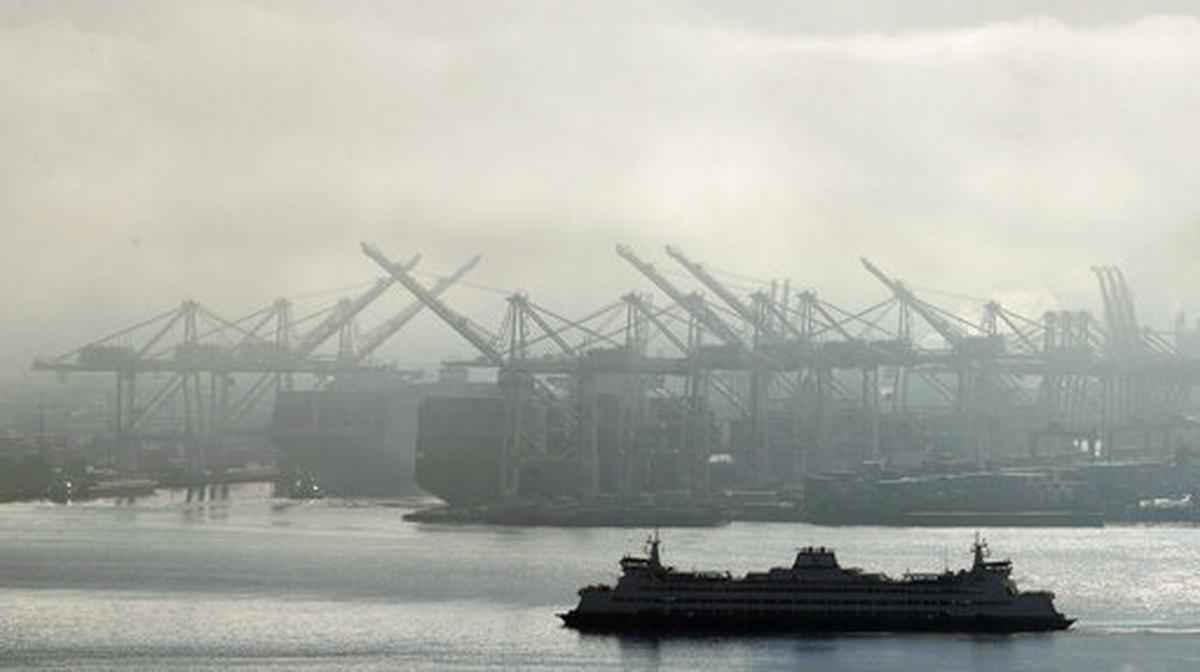
A 49-acre pop-up site also will be opening soon at the Port of Seattle, allowing exporters to stage their products in shipping containers to await loading.
Despite record profits last year, shipping companies actually exported 24% fewer goods, which led to exporters paying increased fees while their goods languished on the docks.
The pop-up will be able to stage 10,000 shipping containers. If it proves effective, opportunity for future pop-up staging sites could be available for other ports in the state.
“We are going to fight for these shippers who need to get their product to international markets, and as a very trade dependent state, I will make this the biggest priority of this committee, if it’s what it takes,” Cantwell said.
The bill also provides limited funding to help with the increasing costs of shipping containers.
It would provide exporters with $200 per container, or $400 for refrigerated containers.
While that funding isn’t intended to completely offset the costs of container increases, it would provide some relief at a time when exporters need it most.
Long-term changes in the bill include:
- Granting the Federal Maritime Commission greater authority to regulate harmful and discriminatory practices by international shipping companies.
- Requiring carriers to certify that the fees they charge for delays are in compliance with federal regulations or face penalties.
- Increasing transparency on how many empty containers carriers are transported.
- Prohibiting ocean carriers from unreasonably declining U.S. cargo, such agriculture exports, that have left been stranded at the docks.
This story was originally published March 30, 2022 at 12:53 PM with the headline "1 in 6 WA exports linked to Tri-Cities. U.S. Senate bill may ease crippling costs."