
Where to find this fall’s mountain gold
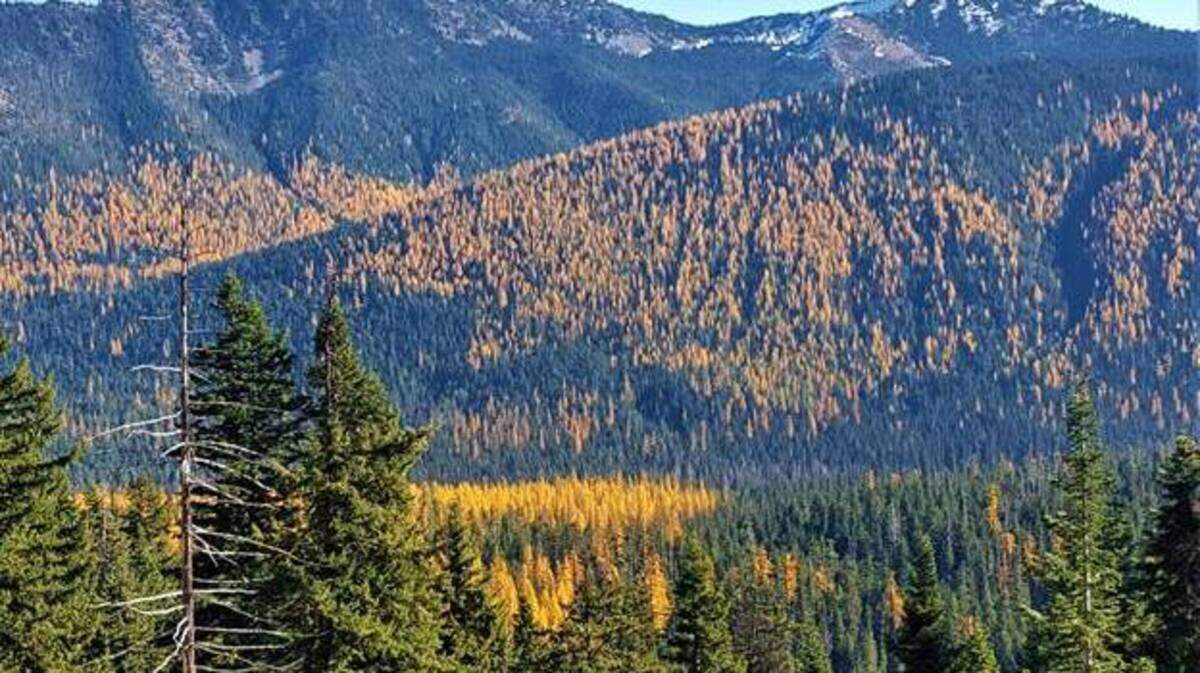
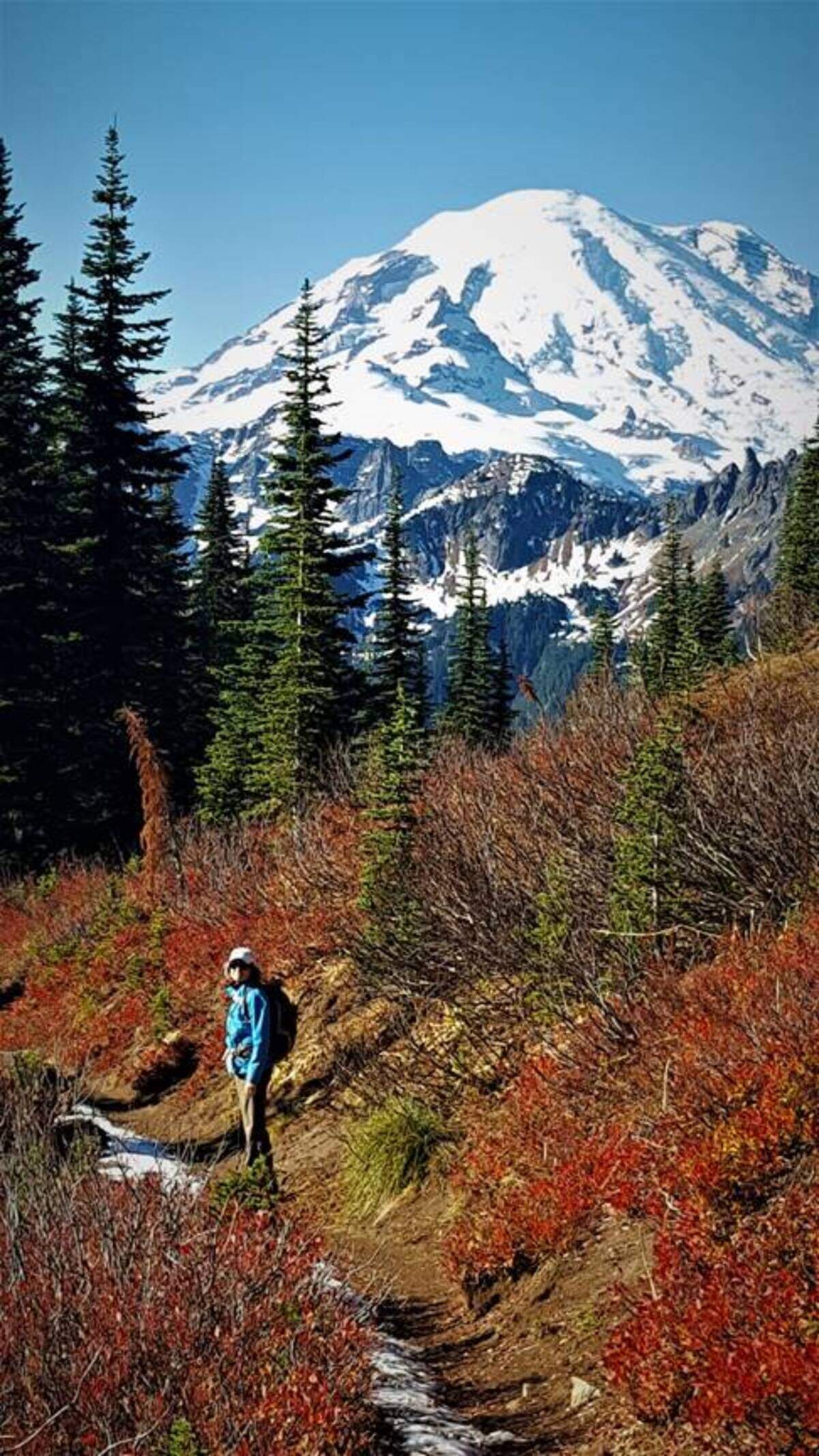
The fall is here and the mountain colors are at their second and final peak of the year.
The flowers are going to seed and their leaves are turning bright yellow and red producing an amazing array of visual contrasts and postcard-worthy photo opportunities.
One of the most glorious spectacles in the Cascades are the larches, which turn an unmistakable golden yellow and make them easy to spot from a distance.
Larches are referred to as a deciduous conifer, meaning that their leaves fall off in the winter and they grow again in the spring. The leaves are made of tufts of narrow sharp needles which are a bright yellow green in the spring and turn a stunning yellow-gold in the fall.
The needles then drop to the forest floor, and the tree branches are bare in the wintertime. Evergreen trees, by comparison, keep their leaves all winter long.
There are two species of larches that are native to Washington: the western larch and the subalpine larch.
Western larches are triangular in shape with a narrow crown. They can grow up to 170 feet high and tend to be found on north-facing slopes at elevations from 2,000 and 5,500 feet in elevation.
Subalpine larches have branches that spread out in a steady even sequence of tiers in several different directions.
They grow to up to 70 feet high and are usually found in cold, snowy locations on bedrock or rocky outcrops or talus at elevations from 5,800 to 7,500 feet.
Some of the largest and tallest western larches in Eastern Washington are growing with western hemlock in the South Cascades.
You can also find them growing with ponderosa pine, Engelmann spruce and with subalpine fir at higher elevations. They can grow singly by themselves or in glorious thick tall stands.
Larch also is a hardy tree that has adapted to the fire successional ecosystem of the eastern slopes of the Cascades. The bark is fire-resistant; the larger larch trees are often among the oldest trees present, some growing over 250 years.
Larch has been used several ways. Native Americans drank tea made from the young shoots to treat tuberculosis and laryngitis. and used to chew gum produced from the tree as well as eat part of the tree and its sap.
The wood is tough and durable, but also flexible in thin strips, and is a favorite wood for boat and yacht builders.
Small larch poles are widely used for rustic fencing. Western larch is used to produce Venice turpentine.
The wood is sought after as firewood in the Northwest, where it is often called “tamarack,” although it is a different species than the tamarack larch. The wood burns with a sweet fragrance and a distinctive popping noise.
Both larch species can be found almost everywhere on the eastern slopes of the Cascades.
Head into the mountains along Highway 12 to White Pass, Highway 410 to Chinook Pass, or Interstate 90 to Snoqualmie Pass, or Highway 97 over Blewett Pass in late September to late October.
You can take any of the major national forest access roads off the main highways and head up the valleys and onto the ridgelines for the views.
Keep your eyes out for the green rectangular elevation signs, and as soon as you go over 2,000 feet, start looking at the tree-covered hillsides and the mountain slopes at higher elevations.
You’ll find the gold quite easily.
This story was originally published September 30, 2018 at 12:57 PM.