
From Heritage U to Harvard: Tri-Cities educator turns her journey into inspiration
AI-generated summary reviewed by our newsroom.
- The regional assistant director at Heritage University in Tri-Cities advances equity in education as a leader at Heritage.
- Harvard residency deepens her global perspective on leadership and inclusion.
- Her Oaxacan roots and lived experiences shape a mission of student empowerment.
When Yesenia Aquino-Bautista stepped onto Harvard’s historic campus for the first time this summer, she paused, looked around and let the moment sink in.
“It was surreal,” she said. “I would just stand there and think, ‘Wow, I’m really here.’ I couldn’t believe it.”
For Aquino-Bautista, who was born at Kennewick General Hospital and raised in the Tri-Cities, the trip to Boston was more than a milestone in her education. It was the affirmation of a journey shaped by her family’s roots in Oaxaca, Mexico, the challenges of colorism and her drive to carve a path in higher education leadership.
Finding belonging at Harvard
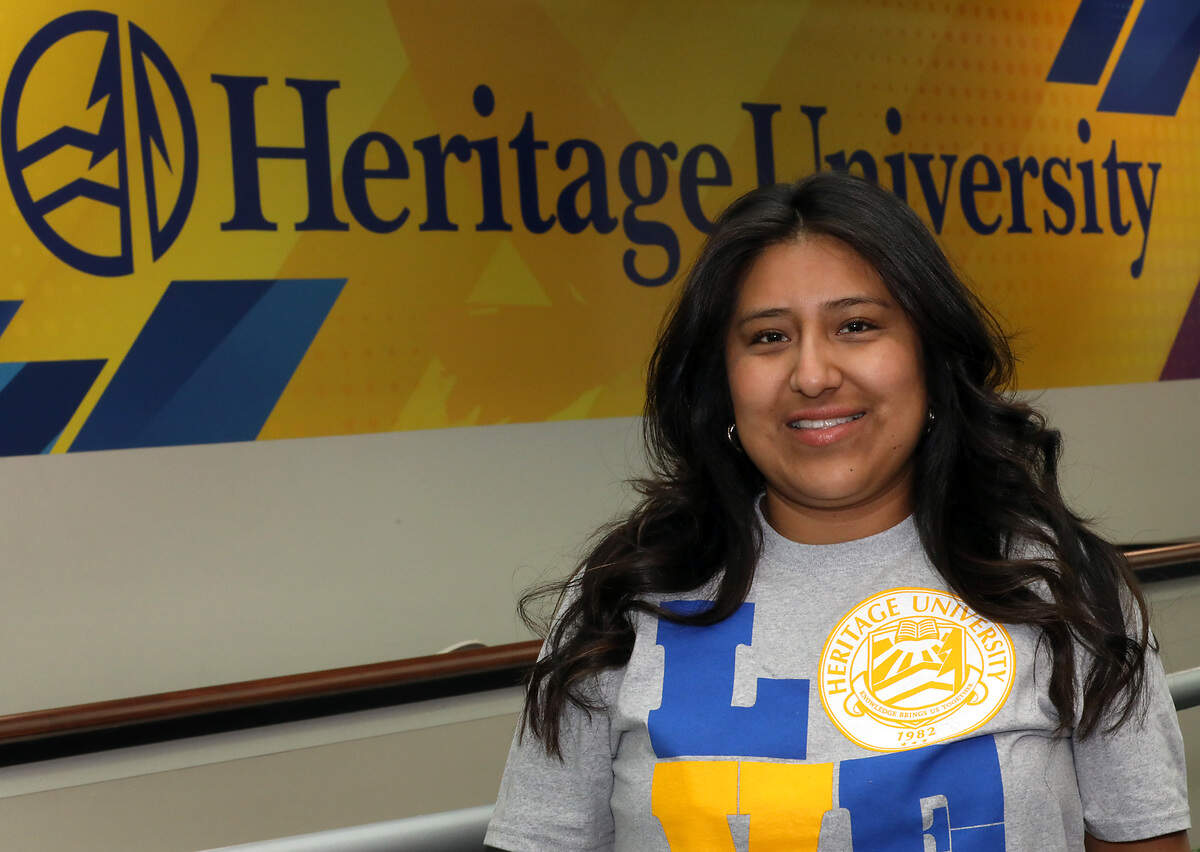
Aquino-Bautista is pursuing a master’s in educational leadership at Harvard University through it’s part-time online program. The recent residency in Boston brought together students from around the globe, Asia, Africa, Australia and beyond.
“Being in a room with people from all over the world opened my eyes,” she said. “Education systems are completely different in other countries. When we come together, our ideas challenge each other, and we learn new ways to think about leadership and equity in education.”
She recalled one seemingly small but powerful example: how Harvard requires incoming online students to submit photos for ID cards before arriving. For Aquino-Bautista, it connected to her own efforts at Heritage University to create a sense of belonging for students who don’t have access to a main campus.
“Something as simple as a student ID gives you pride. It makes you feel like you belong,” Aquino-Bautista said.
Roots in Oaxaca
Aquino-Bautista’s parents emigrated from Oaxaca, the state with the largest indigenous population in Mexico. When she was young, her family temporarily returned to Oaxaca while her younger brother dealt with health challenges.
“It was beautiful,” she remembered. “We lived with my grandparents in the Valle Centrales, surrounded by mountains and nature.”
But when the family came back to the Tri-Cities, she began to notice the sting of colorism.
As a child, she often heard derogatory terms targeting her Oaxacan heritage.
“People assumed we were poor, unintelligent, or uneducated,” she said. “Later, through my studies, I realized it all traced back to how far you were from whiteness.”
That experience fueled her passion for education.
“I decided I wasn’t going to let poverty or stereotypes define me. Education became my tool for empowerment—for me, my family, and my community.”
A role at Heritage University
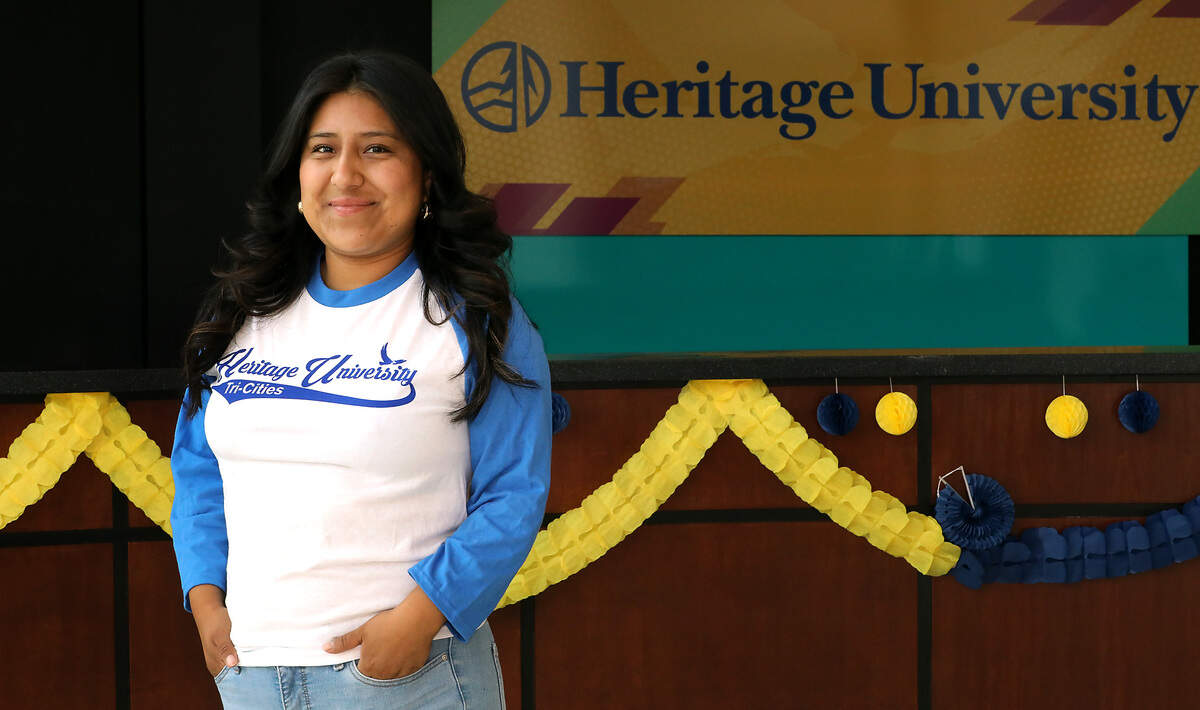
Today, Aquino-Bautista is the regional assistant director at Heritage University, where she advises students and supports recruitment, retention, marketing and student life initiatives.
Her mission is to help students, many of them first generation, Hispanic or Native, see themselves as capable and worthy of higher education.
“I tell them: you belong here. Your identity is your strength,” she said. “That’s why I love working at Heritage. Everyone here truly cares about the students.”
Family, faith and role modles
As the eldest of four siblings, Aquino-Bautista takes her role as a big sister seriously. Her brothers, she said proudly, are thriving, one has worked at Google and TikTok, another is pursuing college and her youngest just graduated from high school and is a musician.
She also draws inspiration from mentors like her supervisor, Martin, whom she credits with showing her the importance of Latino representation in leadership. “Seeing him succeed made me believe it was possible for me, too.”
Faith, she added, keeps her grounded. “When I face struggles, I put it in God’s hands. That’s how I move forward.”
Carrying her community forward
For Aquino-Bautista, every achievement is about more than herself. Being accepted to Harvard was a personal triumph, but also a victory for her Oaxacan and Indigenous heritage.
“It was my way of saying: we are not dumb, we are not illiterate, and we do matter,” she said. “Every time one of us breaks a stereotype, it’s a win for our entire community.”
Her advice to students facing discrimination? Never forget where you come from.
“Your ancestors fought and sacrificed so you could be who you are today. Be proud of that. And whatever you pursue, do it with your whole heart.”